
How to Light Your Backyard Safely for Summer Entertaining
Summer evenings in New Hampshire invite long dinners on the patio, late games in the yard, and gatherings that stretch well past sunset. Good lighting turns a plain backyard into a comfortable space your guests will want to stay in, yet that same lighting can create real hazards when it is wired or installed the wrong way. Outdoor fixtures face rain, humidity, sprinklers, and the heavy moisture that rolls in off the lakes around Laconia, and electricity and water make a dangerous pair. Many homeowners string up lights, plug in extension cords, and run wiring across the grass without realizing they have built a shock or fire risk. The good news is that safe backyard lighting follows clear rules, and those rules are easy to understand once someone explains them. This guide walks through how to light your backyard the right way, the mistakes that cause the most trouble, and the signs that tell you it is time to call a licensed electrician. By the end you will know how to plan a setup that looks great and keeps your family and guests protected all season long. Safe lighting is the foundation of every good summer party, and it starts with the choices you make before you ever flip a switch.
How to Plan Safe Backyard Lighting for Summer Entertaining
Planning is the part most homeowners skip, and it is the part that matters most for safe backyard lighting during summer entertaining. Before you buy a single fixture, walk your yard and map out where people will gather, where they will walk, and where water collects after a storm. You want bright, even light over seating and cooking areas, softer light along paths, and zero exposed wiring anywhere a foot or a hose might reach it. The fixtures you choose, the way they are rated for moisture, and the protection on the circuit feeding them all decide how safe the finished setup will be. A thoughtful plan also keeps your circuits from being overloaded, which is one of the leading causes of tripped breakers and overheated wiring in summer. Take the time to think it through, and the installation becomes far simpler and far safer.
Choosing the Right Backyard Lighting for Summer Entertaining
The first decision in any safe backyard lighting plan is the type of lighting you actually want, because each kind carries its own demands. Low voltage landscape lighting runs on twelve volts through a transformer, which dramatically lowers shock risk and makes it a favorite for paths, garden beds, and accent lighting around a patio. Line voltage fixtures run on the full one hundred twenty volts from your home and produce brighter, broader light that works well for large entertaining areas, but they must be installed with much greater care. Solar lights need no wiring at all, though they fade in shaded yards and during the long stretches of cloudy weather common in a New Hampshire summer. String lights have become hugely popular for backyard parties, and they can be perfectly safe when they carry an outdoor rating and plug into a protected outlet. The trick is matching the right kind of lighting to the right spot rather than forcing one type to do everything. A balanced design usually blends two or three of these styles to cover both function and atmosphere.
Brightness and placement deserve just as much thought as the fixture type when you plan backyard lighting for summer entertaining. Lights aimed straight into seating areas create glare that strains the eyes and ruins the mood, so angle them downward or wash them across walls and fences instead. Pathways need steady, low level light that marks the edges clearly without blinding anyone who walks toward it, which prevents trips and falls once the sun goes down. Cooking and grilling stations call for brighter, focused light so no one is handling sharp tools or hot surfaces in the dark. Color temperature shapes the whole feel of the space, with warmer tones around twenty seven hundred Kelvin giving a relaxed glow and cooler tones reading as harsh in a backyard setting. Dimmers and zones let you brighten the grill area while keeping the lounge soft, all from the same system. Good placement is what separates a yard that simply has lights from a yard that is truly lit well.
Energy use rounds out the lighting choice, and it ties directly into both safety and your summer electric bill. LED fixtures draw a fraction of the power that old halogen or incandescent bulbs pull, so they run cooler, last far longer, and place much less strain on your outdoor circuits. Lower heat output matters outdoors because hot fixtures near dry mulch, fences, or fabric shades raise the risk of fire. Fewer watts also mean you can run more fixtures on a single circuit without pushing it past its limit, which keeps breakers from tripping in the middle of a gathering. Quality LED products carry ratings that confirm they are built for wet or damp locations, and choosing those over bargain bulbs pays off over years of summers. Smart controls add timers and app control so lights are not left burning all night and wasting energy. If you want help selecting fixtures that fit both your yard and your budget, our team can guide the process. Ready to upgrade your yard? Click here for our outdoor lighting installation service.
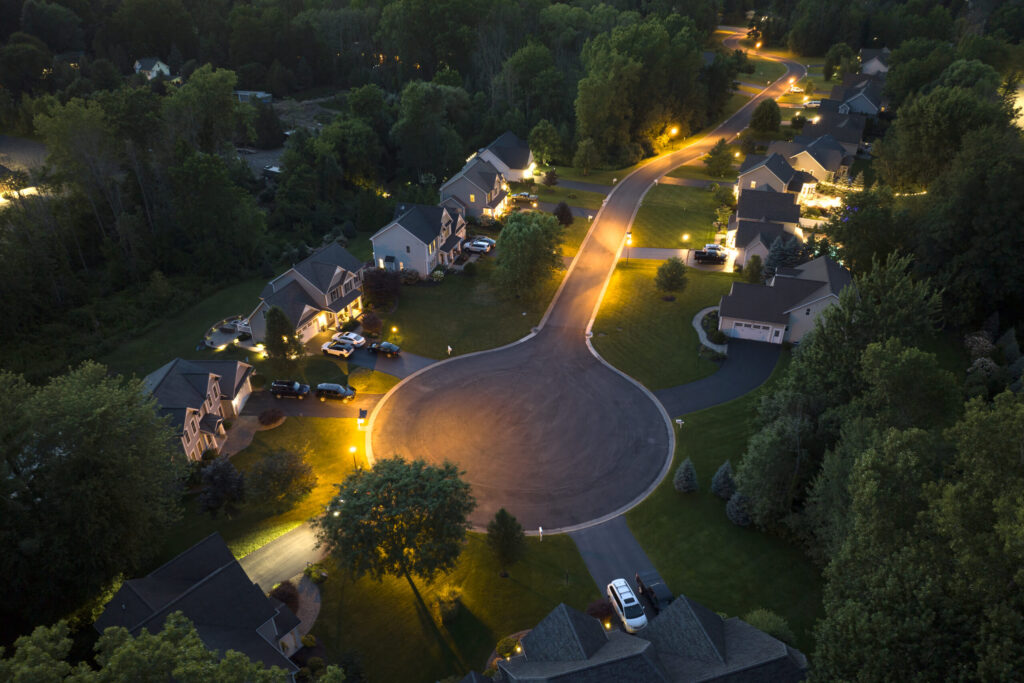
Wet Rated Fixtures for Safe Backyard Summer Lighting
Moisture ratings are the single most important specification for safe backyard summer lighting, and most homeowners have never been told what they mean. Outdoor fixtures carry a label that reads either damp location or wet location, and the difference decides where each fixture belongs. A damp rated fixture handles humidity and the occasional splash but should sit under a covered porch or eave where direct rain never reaches it. A wet rated fixture is sealed to survive a full soaking, so it is the correct choice for any spot exposed to rain, sprinklers, or the heavy dew that settles overnight. Installing a damp rated fixture in an open, rain exposed location is a common and dangerous error that leads to corrosion, shorts, and shock hazards. The rating is printed right on the product or its box, so checking it takes only a moment and saves enormous trouble later.
The materials and seals on a fixture matter just as much as the printed rating when it comes to safe backyard summer lighting. Cheap fixtures use thin gaskets and low grade metals that crack, rust, and let water creep into the wiring after only a season or two of New Hampshire weather. Quality wet rated products use sealed lenses, stainless or coated hardware, and gaskets that keep moisture out for years. Around lakes and in low lying yards, the constant humidity speeds up the breakdown of weak components, so paying a little more for durable fixtures is a genuine safety decision rather than a luxury. Pay attention to how the fixture mounts as well, since water that pools at a poorly sealed base will eventually reach the connections inside. Drainage holes, proper gaskets, and correct mounting angles all keep water moving away from live parts. A fixture that sheds water cleanly will outlast and outperform one that traps it every time.
Fixtures near water features demand the strictest attention of all in a safe backyard summer lighting plan. Pools, hot tubs, ponds, and fountains create zones where electrical codes set firm distance and protection rules to prevent electrocution. Lighting placed too close to a pool or spa without the right rating and bonding becomes a serious life safety hazard, not a minor code issue. Any wiring serving these areas should be installed by a licensed electrician who understands the bonding and grounding requirements that keep stray current away from swimmers. The same caution applies to lighting around hot tubs, where the combination of water, bare feet, and electricity leaves no room for shortcuts. If your entertaining space includes a pool or spa, the lighting around it deserves professional handling from the start. Cutting corners near water is the kind of mistake that turns a fun summer into a tragedy, and it is entirely preventable.
GFCI Protection for Safe Backyard Lighting
Ground fault circuit interrupter protection is the safety device that does the most to prevent shocks in safe backyard lighting, and code requires it for good reason. A GFCI device constantly compares the current flowing out to the current flowing back, and the instant it senses even a tiny imbalance it cuts power in a fraction of a second. That imbalance often means electricity is escaping through an unintended path, which could be a person standing on wet grass. Outdoors, where moisture is everywhere, this protection is not optional, and every receptacle feeding backyard lights or party equipment should be covered by it. The protection can come from a GFCI outlet, a GFCI breaker in your panel, or both, depending on how the circuit is built. Without it, a small fault that a GFCI would catch instantly can instead deliver a dangerous or deadly shock.
Knowing how your GFCI protection is set up is part of keeping safe backyard lighting truly safe through the summer. Many homes have a single GFCI outlet that protects everything wired downstream of it, so one tripped device can shut off several lights at once and leave homeowners confused about the cause. Testing these outlets monthly with the built in test and reset buttons confirms they still work, since the internal components do wear out over time. An outlet that will not reset, trips for no clear reason, or shows scorch marks is telling you something is wrong and needs attention. Outdoor receptacles also need weatherproof in use covers that protect the outlet even while a cord is plugged in, not just flat caps that only close when nothing is connected. These details are easy to overlook and easy to fix once you know to look for them. A few minutes of checking now prevents a frightening surprise during your next gathering.
When GFCI protection is missing, failing, or improperly installed, the safest move is to bring in a licensed electrician rather than guess. Adding GFCI outlets to older outdoor circuits, swapping standard breakers for GFCI breakers, and confirming the whole setup is wired correctly are jobs that reward professional precision. An electrician can also confirm your outdoor outlets are on circuits sized to handle the load of your lights, sound system, and any other party equipment without overheating. Many older homes in the Lakes Region were built before outdoor GFCI rules tightened, so their yards run on outlets that no longer meet current safety standards. Upgrading those circuits is one of the smartest summer investments a homeowner can make. If your backyard outlets lack proper protection, do not wait for a scare. Click here for our GFCI outlet installation service.
Common Backyard Lighting Safety Mistakes During Summer Entertaining
Even with the right fixtures and protection, homeowners regularly make a handful of mistakes that undercut backyard lighting safety during summer entertaining. These errors tend to show up when people rush a setup before a party, reach for the cheapest quick fix, or treat outdoor wiring like indoor wiring. The results range from nuisance trips that kill the lights mid gathering to genuine fire and shock hazards that put everyone at risk. Most of these mistakes come from a simple lack of information rather than carelessness, which means they are completely avoidable once you know what to watch for. Recognizing them early lets you correct course before a small problem becomes an emergency. The three that follow cause the most service calls we see each summer, and each one is worth understanding in detail.
Overloaded Circuits and Backyard Lighting Safety
Overloading a circuit is one of the most frequent threats to backyard lighting safety, especially during summer entertaining when demand spikes. A single outdoor circuit can only carry so much before the breaker trips or, worse, the wiring overheats behind the scenes. Homeowners often plug strings of lights, a sound system, a blender, and phone chargers into the same outdoor outlet without realizing they have stacked far more load than the circuit was built to handle. The breaker tripping is actually the system protecting itself, and repeatedly resetting it without reducing the load is a mistake that masks a growing danger. Heat builds in overloaded wires, insulation breaks down over time, and that hidden damage can eventually spark a fire inside a wall or junction box. Spreading equipment across multiple circuits and switching to low draw LED lighting both ease the strain. When a yard regularly trips its breaker during gatherings, it is signaling that the electrical supply needs attention.
The summer season makes overloading worse because so much equipment runs at once in the same outdoor space. Air conditioners, pool pumps, and other heavy appliances may already be drawing hard on the home’s panel before the party even begins. Add a yard full of lights and entertainment gear, and the system can reach its limit fast. New Hampshire homes with older panels are especially prone to this, since those panels were never designed for the modern load a family now runs across a summer evening. A panel that hums, feels warm, or shows breakers that trip under normal use is overdue for evaluation. Daisy chaining power strips and stacking adapters to squeeze in more devices only hides the underlying shortage of capacity. The right fix is more circuits or a stronger service, not more outlets crammed onto a tired one.
Solving overload problems safely calls for an honest look at how much power your backyard actually needs. A licensed electrician can calculate your real load, add dedicated outdoor circuits, and confirm your panel can support the way you live and entertain. Adding a circuit specifically for your entertaining area keeps party equipment from competing with the rest of the house. For homes pushing the limits of an older panel, an upgrade to greater capacity ends the constant tripping and removes the fire risk hiding behind it. This is not a project for guesswork or DIY shortcuts, since panel and circuit work carries serious shock and arc hazards. A professional assessment gives you a setup that runs cool, steady, and safe no matter how many guests arrive. Solving it once means you never fight a dead breaker in the middle of a cookout again.
Improper Outdoor Wiring and Backyard Lighting Safety
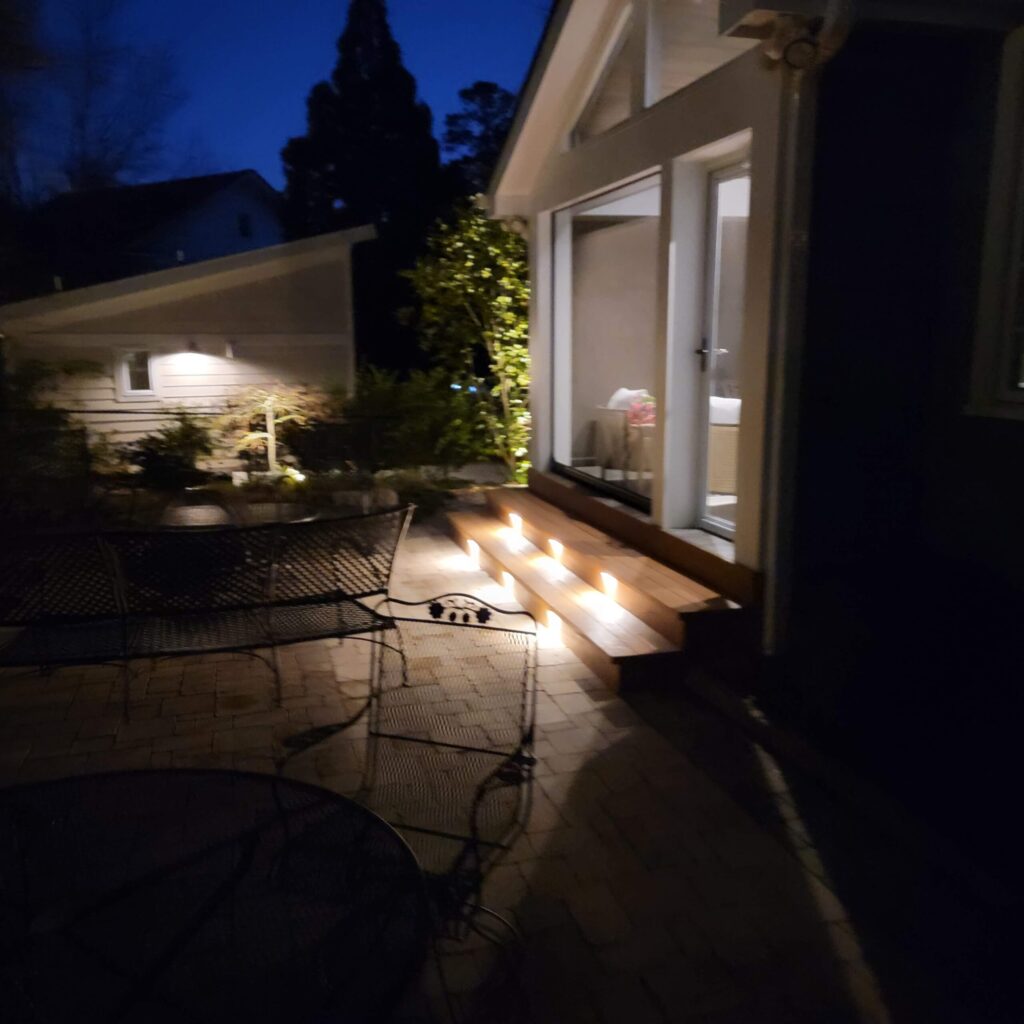
Improper wiring is a quiet but serious threat to backyard lighting safety that often hides until something fails. Indoor cable and standard extension cords are not built to survive outdoors, yet homeowners run them across lawns, staple them to fences, and bury them in flower beds all the time. Outdoor wiring must use cable rated for the conditions it faces, such as direct burial cable installed at the correct depth where local code requires it. Connections left exposed to rain corrode and short, and wiring run across walkways gets crushed, nicked, and worn until the conductors inside are exposed. Sunlight also degrades cheap cord insulation over a single season, leaving brittle, cracked sheathing that no longer protects anything. Wiring done the wrong way may work fine for a while, which is exactly what makes it so dangerous when it finally fails.
The way outdoor wiring connects to your home is another spot where mistakes hide in plain sight. Penetrations through walls must be sealed so water cannot follow the cable inside, and junction boxes outdoors must be rated for wet locations and properly covered. Splices made with electrical tape and left dangling are a recipe for shorts, corrosion, and shock, no matter how tidy they look at first. Buried cable that is not deep enough gets sliced by shovels, aerators, and garden tools, turning a routine yard chore into a brush with live current. Permanent outdoor wiring should never rely on temporary extension cords as a long term solution, since those cords are made for occasional use, not season after season of exposure. Each of these shortcuts trades a small upfront saving for a real and growing hazard. Wiring that is out of sight should never be out of mind.
Doing outdoor wiring correctly is squarely a job for a licensed electrician who knows the codes and the conditions. A professional installs the right cable, sets junction boxes and connections to handle weather, and buries lines at the proper depth with protection where it counts. They also confirm the wiring ties back into a circuit and panel that can carry the load safely. For homeowners who want permanent backyard lighting rather than a tangle of seasonal cords, professional wiring is the only setup that holds up year after year. If your current outdoor wiring looks worn, exposed, or improvised, it is worth having it inspected before someone gets hurt. Click here for our electrical repair service to have damaged outdoor wiring assessed and corrected.
Damaged Cords and Backyard Lighting Safety
Damaged cords are a deceptively common hazard that wrecks backyard lighting safety during summer entertaining. Extension cords and fixture cords take a beating outdoors, getting walked on, run over, pinched in doors, and left out in the weather between uses. Cracked insulation, exposed copper, bent prongs, and warm spots along a cord are all warning signs that the cord has become unsafe. A frayed cord lying on damp grass can energize the ground around it, putting anyone barefoot nearby at real risk. Cords that feel hot during use are carrying more current than they should, which points to either a damaged cord or an overloaded circuit feeding it. Tossing a damaged cord rather than taping it up is always the right call, because tape only hides the problem it pretends to fix.
Using the wrong cord for the job is just as risky as using a damaged one for backyard lighting safety. Indoor rated cords lack the heavier insulation and weather resistance that outdoor use demands, so they break down fast when left outside. Undersized cords that are too thin for the load overheat along their length, which is a fire hazard that builds quietly inside a coiled cord on the lawn. Running cords under rugs, mulch, or door thresholds traps heat and accelerates wear in exactly the spots you cannot see. Daisy chaining several cords together to reach a far corner of the yard adds resistance and connection points where faults love to form. Outdoor rated cords carry markings that confirm their use, gauge, and weather resistance, and matching the cord to the load is a simple habit that prevents trouble. The cord is often the weakest link in an outdoor setup, so it deserves real attention.
The lasting answer to cord problems is to reduce the reliance on cords altogether. Permanent outdoor outlets placed where you actually entertain remove the need to snake long cords across the yard every time you host. Properly installed receptacles on protected circuits give you safe, convenient power right where you need it, with weatherproof covers that guard against the elements. An electrician can add outdoor outlets exactly where your seating, cooking, and lighting areas sit, so cords stay short or disappear completely. This not only improves safety but also makes setup faster and your yard far tidier for every gathering. Fewer cords mean fewer trip hazards, fewer failure points, and far less worry. Investing in proper outlets is the move that finally retires the tangle of cords for good.
Why You Need a Licensed Electrician for Backyard Lighting
Backyard lighting blends design, electrical load, moisture protection, and code compliance into one project, and getting all of it right takes a licensed electrician. A professional sees the hazards a homeowner cannot, calculates loads correctly, and installs everything to meet the codes that exist to keep people safe. The cost of doing it right is small next to the cost of a fire, a shock, or a failed inspection during a home sale. Around the Lakes Region, the heavy moisture and older home electrical systems make professional work even more valuable. The sections below explain why expert installation protects your summer, why code compliance matters, and why local homeowners trust Whiting Electrical Services with the job.
Professional Backyard Lighting Installation Protects Your Summer Entertaining
A professional backyard lighting installation protects your summer entertaining by removing the hidden risks that DIY setups leave behind. An electrician evaluates your existing circuits, panel capacity, and outdoor outlets before adding a single fixture, so the finished system never runs past its safe limit. They choose wet rated fixtures, install proper GFCI protection, and wire everything to handle rain, humidity, and lakeside moisture. That foresight is what keeps your lights running steadily through a long evening instead of tripping breakers in the middle of the party. The result is a yard you can enjoy with confidence rather than one you constantly babysit.
Professional installation also delivers a result that simply looks and works better for summer entertaining. An electrician balances brightness across zones, hides wiring out of sight, and places fixtures so the light flatters your space instead of glaring into it. They can add dimmers, timers, and smart controls that let you set the mood and save energy at the same time. This level of finish is hard to reach with store bought kits and a weekend of effort. The yard ends up both safer and more inviting, which is exactly what good entertaining space should be.
Beyond looks and convenience, professional work protects the value and safety of your whole home. Faulty outdoor wiring can damage your electrical system, trip protective devices throughout the house, and create fire risk that reaches well past the yard. A licensed electrician confirms the entire setup integrates safely with your panel and existing circuits. That peace of mind carries through every summer for years, not just the season you install it. When the work is done right the first time, you stop worrying about it and simply enjoy your backyard.

Code Compliant Backyard Lighting for Summer Safety
Code compliant backyard lighting for summer safety is not red tape; it is the accumulated wisdom of preventing real injuries and fires. Electrical codes set the rules for GFCI protection, fixture ratings, burial depths, and clearances around water, and each rule exists because someone was once hurt by ignoring it. A licensed electrician knows these requirements and applies them as a matter of routine. Work that meets code is far less likely to fail, far safer for your family, and far easier to stand behind. Skipping these standards to save time or money trades long term safety for a short term shortcut.
Code compliance also matters well beyond the day the lights go on. When you sell your home, an inspector will flag outdoor electrical work that does not meet standards, and unpermitted DIY wiring can stall or sink a sale. Insurance claims after a fire can be denied when the cause traces back to wiring that never met code. Permitted, inspected work creates a clean record that protects you on both fronts. Doing it right today saves expensive headaches down the road.
Around the Lakes Region, code compliant lighting carries extra weight because of the conditions homes face here. High humidity, frequent rain, and the proximity of so many properties to water raise the stakes on proper ratings and protection. Older homes in towns like Laconia, Gilford, and Meredith often run on electrical systems that predate current outdoor standards. Bringing those systems up to code during a lighting project closes safety gaps that have lingered for years. A licensed electrician makes sure your backyard meets the standards built for exactly this climate.
Why Choose Whiting Electrical Services for Backyard Lighting
Homeowners across the Lakes Region choose Whiting Electrical Services for backyard lighting because we treat every project with craftsmanship and care. We back our work with a Lifetime Craftsmanship Warranty, hold an A rating with the Better Business Bureau, and have earned the trust of clients including Mr. Beast and WillScot for electrical projects. Our team is committed to delivering a five star service on every visit, from the first walkthrough to the final test. We listen to how you use your yard and design lighting that fits your space, your style, and your safety. That combination of skill and attention is why our customers keep coming back.
We also make working with us straightforward and rewarding for our community. We proudly offer a ten percent discount for veterans, first responders, and paramedics as a thank you for their service. As a Generac Certified Dealer and Service Provider, we bring deep electrical expertise to every job, large or small. We show up on time, explain our work in plain terms, and leave your yard clean and ready to enjoy. You always know what we are doing and why, with no surprises along the way.
When you are ready to light your backyard safely for a summer of entertaining, our team is here to help you do it right. Want professional outdoor lighting that lasts? Click here for our outdoor lighting installation service and let us design a setup built for your space. From fixture selection to GFCI protection and code compliant wiring, we handle every detail so you can relax and enjoy your yard. Reach out today to schedule your backyard lighting project before the height of the season. Call Whiting Electrical Services at (603) 512-3887 to get started, and let us turn your backyard into a safe and beautiful place to gather all summer long.