Why Your Air Conditioner Keeps Tripping the Breaker and How to Fix It
A breaker that trips every time your air conditioner runs is more than an annoyance during a hot New Hampshire summer. It is a warning sign that something in the cooling system or the electrical circuit is drawing more current than it should. A circuit breaker exists to protect your home, so it cuts power the moment it senses an overload, a short circuit, or a ground fault. When your air conditioner keeps tripping the breaker, the unit is either pulling too many amps or the wiring feeding it has a fault. Some causes are simple and inexpensive to correct, like a clogged air filter or dirty coils. Other causes point to failing components or an undersized electrical panel that needs professional attention. Ignoring the problem can damage the compressor, melt wiring insulation, and even create a fire risk inside the walls. This guide walks you through the most common reasons your air conditioner keeps tripping the breaker, the fixes you can try safely, and the moment you should call a licensed electrician.
Common Reasons Your Air Conditioner Keeps Tripping the Breaker
Most air conditioner breaker problems trace back to a handful of repeat offenders. The compressor draws the largest electrical load in the entire cooling system, so anything that forces it to work harder pushes the amperage past the breaker rating. Restricted airflow, low refrigerant, and worn electrical parts all raise current draw in slightly different ways. A breaker can also weaken with age, tripping at a lower threshold than it did when it was new. Loose or corroded connections add resistance and heat, which causes nuisance trips that come and go. Understanding which category your problem falls into helps you decide what is safe to fix yourself and what belongs to a professional. The three sections below break down the most frequent culprits we see on service calls across the Lakes Region.
How a Dirty Air Conditioner Keeps Tripping the Breaker
A dirty system is the single most common reason an air conditioner keeps tripping the breaker, and it is also the easiest to overlook. The outdoor condenser coil releases the heat your system pulls from inside the house, and that coil collects pollen, grass clippings, cottonwood, and dust through the summer. When the coil is caked with debris, the unit cannot shed heat efficiently, so the compressor runs longer and hotter to reach the temperature you set. A longer, harder run cycle means a higher sustained amperage, and a breaker reads that sustained overload exactly as it was designed to read it. The breaker then trips to keep the wiring from overheating, which is the protection working correctly even though it feels like a malfunction. Cleaning the coil and clearing two feet of space around the outdoor unit often restores normal current draw. This is also why annual maintenance pays for itself by preventing both breaker trips and expensive compressor failures.
A clogged indoor air filter creates the same overload from the opposite direction by starving the system of return air. When the blower cannot pull enough air across the evaporator coil, refrigerant pressures fall out of their normal range and the compressor strains to keep cooling. That strain raises amperage on the compressor circuit and pushes the breaker toward its trip point on hot afternoons. A filter packed with dust can also let the indoor coil freeze into a block of ice, which blocks airflow even further and compounds the electrical stress. Many homeowners forget that a one inch filter needs changing every thirty to ninety days during heavy cooling season. Swapping the filter is a five minute job that protects both the cooling equipment and the breaker. If the coil has already frozen, the system needs to thaw fully before it will run without tripping again.
Blocked airflow inside the ductwork or a failing blower motor produces the same chain reaction that a dirty filter does. Closed registers, crushed flex duct, and dirty blower wheels all reduce the volume of air moving through the system. The compressor and fan motors then run under load conditions they were never sized for, and the extra current shows up at the panel as a tripped breaker. A blower motor that is wearing out draws higher amperage on its own as the bearings drag and the windings degrade. Each of these airflow problems is worth ruling out before you assume the worst about the compressor itself. A maintenance visit measures airflow, motor amp draw, and refrigerant charge in one appointment. If your air conditioner keeps tripping after a thorough cleaning, the cause is most likely electrical rather than airflow. Need help tracing a stubborn breaker trip? Click here for our circuit breaker repair service.
How a Failing Capacitor Makes Your Air Conditioner Trip the Breaker
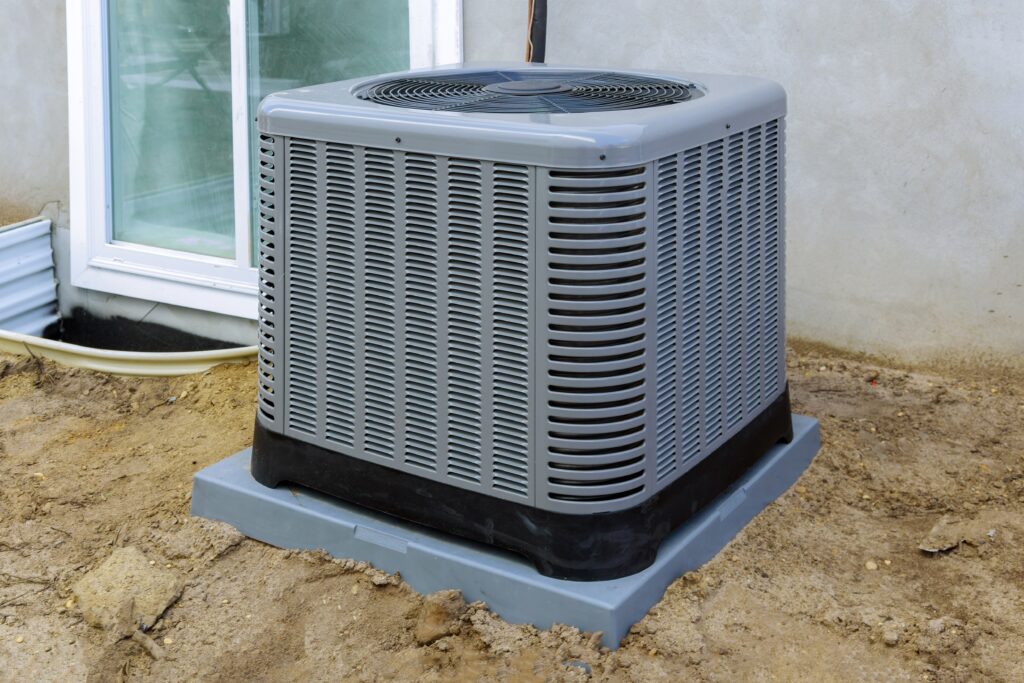
The capacitor is a small cylindrical component that stores and releases an electrical charge to start and run the compressor and fan motors. Think of it as the jolt that gets a heavy motor spinning against its own inertia. When a capacitor weakens, the compressor struggles to start and pulls a massive surge of current during that first split second of every cycle. That inrush spike can be several times the normal running amperage, and a breaker reacts to the spike by tripping instantly. A capacitor that is bulging, leaking, or reading below its rated microfarad value is a clear sign of failure. New Hampshire heat and electrical surges both shorten capacitor life, so this part fails more often than people expect. Replacing a capacitor is a common repair, but the charge it holds is dangerous and the work belongs to a trained technician.
Hard starting is the technical name for what happens when a tired compressor and a weak capacitor fight each other at startup. The motor wants to turn, the capacitor cannot deliver enough push, and the system sits in a high amperage stall for a moment before the breaker cuts power. You may hear a hum or a click from the outdoor unit right before the trip, which is the contactor pulling in while the motor fails to spin. Each failed start stresses the compressor windings and the breaker at the same time, so the problem tends to get worse quickly. A hard start kit can sometimes extend the life of an aging compressor, but it treats a symptom rather than the root cause. A proper diagnosis measures both the capacitor value and the compressor inrush current. Skipping the diagnosis and simply resetting the breaker over and over is how a fixable repair turns into a full compressor replacement.
A failing compressor itself is the most serious electrical cause of repeat breaker trips. Over years of service, the motor windings inside a compressor can break down and short to ground or to each other. A shorted winding draws enormous current the instant the compressor energizes, and the breaker trips immediately to stop a fire. This is often the difference between a breaker that trips after the unit runs for a while and a breaker that trips the moment you turn the system on. An instant trip on startup usually points to a dead short, while a delayed trip after several minutes usually points to an overload from heat or airflow. A technician confirms a grounded compressor with a resistance and insulation test before condemning the unit. When the compressor has failed electrically, the choice often comes down to a major repair or replacing the outdoor unit entirely.
How Bad Wiring Causes Your Air Conditioner to Trip the Breaker
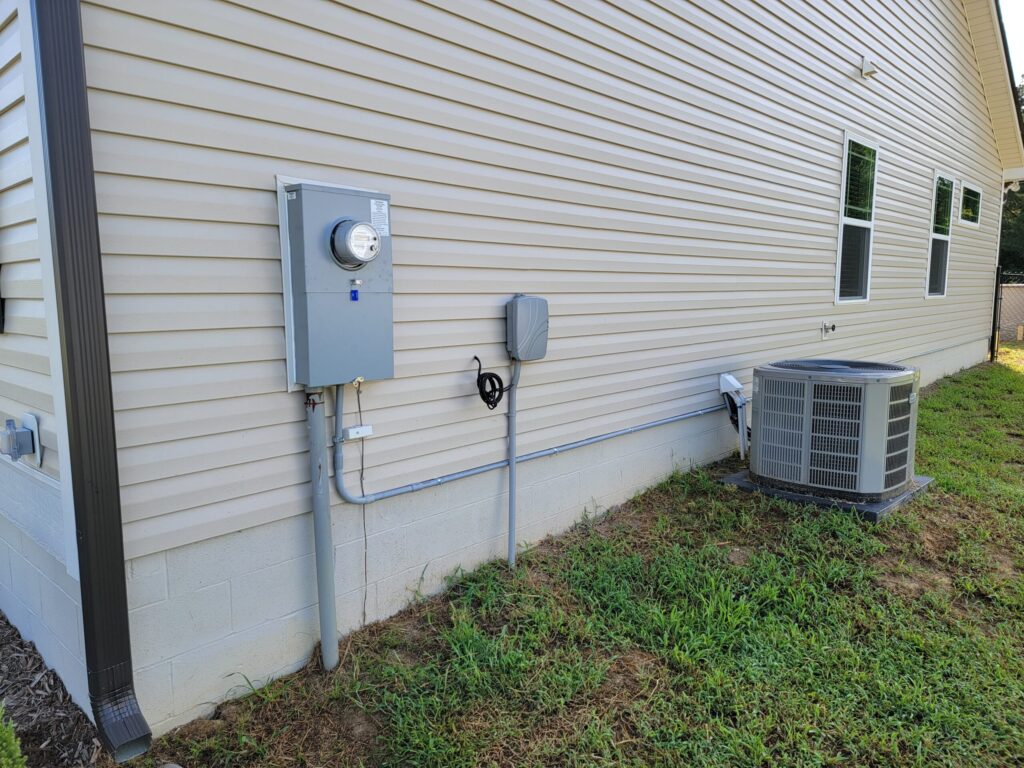
Faulty wiring on the air conditioner circuit causes some of the most dangerous breaker trips because the fault sits inside the electrical system rather than the cooling equipment. Connections at the disconnect box, the contactor, and the breaker itself loosen over time from heat cycling and vibration. A loose connection adds resistance, and resistance generates heat that scorches terminals and melts insulation. That damaged section can arc and create a short circuit that trips the breaker without warning. Rodent damage to outdoor wiring is also common in our region, since mice and squirrels chew through insulation around condenser units. Any sign of burnt smell, discolored wire, or a warm panel cover is a reason to shut the system off and call a professional immediately. This is not a problem to diagnose by resetting the breaker and hoping it holds.
A ground fault is a specific wiring problem where current escapes its intended path and flows to ground through the equipment housing or a damaged conductor. Moisture intrusion into the outdoor disconnect or the condenser control box is a frequent trigger after heavy summer storms. When current leaks to ground, the breaker senses the imbalance and trips to prevent shock and fire. Ground faults often show up as trips that happen during or right after rain, then stop once everything dries out. That intermittent pattern makes the fault easy to dismiss, but the underlying damage only gets worse. A licensed electrician can locate the leak with an insulation resistance test and seal or replace the compromised wiring. Letting a ground fault linger risks both your equipment and anyone who touches a metal part of the system.
An undersized breaker, an oversized breaker, or the wrong wire gauge will cause nuisance trips and far worse hazards. Every air conditioner has a maximum overcurrent protection rating printed on the data plate, and the breaker must match that specification exactly. A breaker that is too small trips under normal load, while a breaker that is too large fails to protect the wire and invites overheating before it ever trips. Mismatched wiring from a past do it yourself repair or a rushed installation shows up as repeat trips and warm conductors. An old breaker can also simply wear out internally and begin tripping below its rated amperage. Correcting these issues means verifying the data plate, the wire size, and the breaker rating all agree. If your air conditioner keeps tripping the breaker because of wiring or panel problems, click here for our air conditioning wiring service.
How to Fix an Air Conditioner That Keeps Tripping the Breaker
Fixing an air conditioner that keeps tripping the breaker starts with separating the safe homeowner tasks from the work that requires a licensed electrician. A handful of maintenance steps resolve a surprising number of trips, and they cost nothing but a little time. When those steps do not hold, the problem has moved into territory where high voltage, capacitors, and live panels make professional service the only safe path. The goal is never to keep resetting the breaker, since repeated resets on a real fault can start a fire. Instead, you work through the simple checks, then hand off anything electrical to a pro who carries the right meters and training. The sections below give you a clear order of operations so you know exactly what to try and when to stop.
Simple Steps to Stop Your Air Conditioner From Tripping the Breaker
Start by giving the system a full reset before you change anything else, because a single trip can come from a one time power fluctuation. Turn the thermostat off, switch the air conditioner breaker fully to the off position, and wait about thirty minutes before turning it back on. That pause lets the internal compressor overload protector cool down and reset itself. If the breaker holds and the system cools normally after that, you may have caught a brief surge rather than a chronic fault. Mark the date and watch for any repeat, since one isolated trip is very different from a daily pattern. A trip that returns within minutes or hours, however, means a real problem is waiting to be found. Never tape, wedge, or repeatedly force a breaker that will not stay set.
Next, work through the airflow and cleaning checks that resolve the majority of overload trips. Replace the indoor air filter with a fresh one of the correct size and rating for your system. Walk outside and clear leaves, grass, and debris from the condenser, leaving at least two feet of open space on every side. Gently rinse the outdoor coil with a garden hose from the inside out if the fins are visibly dirty, with the power off at the disconnect first. Confirm that all your supply registers are open and that no furniture or rugs are blocking return air. These steps lower the load on the compressor and often stop the trips that come after the system has been running a while. A clean, well maintained system simply draws fewer amps.
Finally, look and listen for the warning signs that tell you to stop and call for help rather than keep troubleshooting. A burning smell, a buzzing or humming outdoor unit that will not start, scorch marks at the panel, or a breaker that trips the instant you switch it on all point to an electrical fault. Trips that follow rain or that come and go with the weather usually mean a ground fault from moisture. Any warmth or discoloration on the breaker or panel cover is a serious red flag. At that point the safe move is to leave the breaker off and schedule a professional. Continuing to reset a breaker under these conditions risks both your equipment and your home. Knowing where the homeowner checklist ends keeps everyone safe.
When to Call an Electrician for an Air Conditioner Tripping the Breaker
Call a licensed electrician the moment the trips continue after you have cleaned the system and replaced the filter. Anything beyond basic cleaning involves either high voltage wiring or stored electrical charge that can injure or kill an untrained person. A professional arrives with a clamp meter, a multimeter, and an insulation tester to measure exactly how many amps each component pulls. That measurement tells the technician immediately if the compressor, the capacitor, the fan motor, or the wiring is the source of the overload. Guesswork wastes money and risks safety, while a proper diagnosis pinpoints the failed part on the first visit. The cost of a service call is small compared to a burned out compressor or a wiring fire. This is the stage where the right tools and training make all the difference.
A breaker that trips instantly on startup almost always signals a dead short or a grounded compressor, and that situation demands professional attention right away. An electrician confirms the fault with resistance testing before any part is replaced, which prevents you from paying for a capacitor when the compressor is the real problem. The technician also inspects the disconnect, the contactor, and every connection for the heat damage that loose terminals leave behind. Damaged wiring gets repaired or replaced to the proper gauge, and corroded connections are cleaned and tightened to specification. If the breaker itself has worn out, it is swapped for one that matches the equipment data plate exactly. Each of these repairs restores safe operation and stops the nuisance trips for good. Skipping the professional step on an electrical fault is how small problems become emergencies.
Some breaker trips count as true electrical emergencies and should never wait until tomorrow. A burning odor, visible smoke, sparking, or a hot panel means you should cut power and call for emergency service without delay. These signs indicate that wiring insulation may be failing and that a fire could be developing inside the wall or the unit. The summer heat that drives heavy air conditioner use is exactly when these faults tend to surface. A fast response protects your family and limits the damage to your electrical system. If your air conditioner trips the breaker with any sign of heat, smoke, or burning, click here for our emergency electrician service. Acting quickly turns a frightening moment into a routine repair.
How a Panel Upgrade Stops Your Air Conditioner From Tripping the Breaker
Sometimes the air conditioner is healthy and the real problem is an electrical panel that cannot keep up with the home’s demand. Older homes across the Lakes Region were wired for far lighter electrical loads than a modern central air system requires. When a single panel feeds an air conditioner, a clothes dryer, a range, and a dozen other circuits, the service can run near its limit on the hottest days. An overloaded service trips breakers as the combined demand peaks, even though no single appliance is faulty. A load calculation by a licensed electrician reveals whether your service capacity matches your actual usage. Upgrading the panel or the service entrance gives your air conditioner the headroom it needs to run without nuisance trips. This is a permanent fix for a home that has simply outgrown its original electrical system.
An outdated panel may also contain breakers that no longer trip reliably or that are known to fail, which is both an electrical and a safety concern. Decades of heat cycling wear out the internal mechanism of a breaker, so it begins tripping below its rated amperage. Certain older panel brands have documented histories of failing to trip when they should, which is a far more dangerous condition than a nuisance trip. Replacing a failing breaker with a correctly rated one often resolves trips that have nothing to do with the air conditioner. A panel upgrade also creates room for dedicated circuits, surge protection, and future additions like an EV charger. Modern panels and breakers respond accurately to faults, which protects both the equipment and the home. A professional evaluation tells you whether a single breaker or the whole panel needs attention.
Adding a dedicated circuit for the air conditioner is another reliable way to stop chronic trips. Central air units are supposed to run on their own circuit, sized precisely to the equipment data plate, with nothing else sharing that breaker. When an air conditioner shares a circuit with other loads, the combined draw trips the breaker even though the unit alone would be fine. A licensed electrician can run a properly sized dedicated circuit and install the correct breaker for your system. This separates the air conditioner from the rest of the household demand and gives it clean, stable power. Pairing a dedicated circuit with a service upgrade future proofs your home for years. Want to give your cooling system the capacity it needs? Click here for our electrical service upgrade service.
Why You Need a Professional to Fix an Air Conditioner Tripping the Breaker
A breaker that keeps tripping is your home telling you that something needs attention before it becomes a hazard. The fixes range from a simple filter swap to a full panel upgrade, and only a trained electrician can safely sort out the electrical causes from the mechanical ones. High voltage wiring, stored capacitor charge, and grounded compressors are genuinely dangerous to work on without the right tools and experience. A professional diagnosis protects your equipment, your wiring, and most importantly the people in your home. Whiting Electrical Services has the training, the tools, and the local experience to find the real cause on the first visit. The sections below explain why professional service is the right call and why homeowners across the Lakes Region trust our team.
Why Professional Air Conditioner Breaker Repair Protects Your Home
Professional breaker repair starts with accurate measurement instead of guesswork, which is the single biggest reason it protects your home. A licensed electrician uses calibrated meters to read the exact amperage each component pulls and the precise condition of the wiring. That data identifies the failed part on the first visit and prevents the costly cycle of replacing the wrong components. Accurate diagnosis also catches hidden hazards like heat damaged terminals and grounded conductors that a casual reset would never reveal. The result is a repair that fixes the actual problem and restores safe operation. Your equipment lasts longer and your home stays protected from electrical fire.
Professional repair also means every correction meets the National Electrical Code and the equipment manufacturer’s specifications. Breaker sizing, wire gauge, and connection torque all follow exact standards that exist to prevent overheating and fire. A do it yourself fix or an unlicensed handyman often misses these specifications, which leaves a hidden hazard behind the wall. A licensed electrician documents the repair and stands behind the work. Code compliant repairs also protect your homeowner’s insurance and your home’s resale value. Doing the job right the first time costs far less than repairing fire or water damage later.
A professional repair finally breaks the dangerous habit of resetting a breaker that should not be reset. Every forced reset on a real fault sends current through compromised wiring and brings the system closer to failure. An electrician removes that temptation by eliminating the underlying fault entirely. Once the true cause is corrected, the breaker holds because the circuit is finally safe. That peace of mind is worth far more than the cost of a service call. Knowing the work was done correctly lets you run your air conditioner all summer without worry.
Why Fast Service Matters When Your Air Conditioner Trips the Breaker
Fast service matters because a tripping breaker often signals a fault that worsens with every cycle. A loose connection that arcs today can scorch a wall tomorrow if it is left to run. Quick diagnosis catches the problem while it is still a simple repair rather than an emergency. In the peak of a New Hampshire summer, a fast response also keeps your family comfortable and safe from the heat. Prompt service turns a stressful breakdown into a routine appointment. The sooner the fault is found, the smaller the repair tends to be.
Fast service also limits the damage to your expensive cooling equipment. A compressor that keeps trying to start against a weak capacitor or a fault degrades a little more with each attempt. Catching the issue early often saves the compressor, which is the most costly part of the entire system. A delayed repair, by contrast, can let a small fault destroy the outdoor unit. Quick attention protects your investment and keeps repair bills manageable. Acting promptly is almost always the cheaper choice in the end.
Fast service brings real safety benefits when a breaker trip points to a wiring fault or a ground fault. Electrical faults that involve heat, smoke, or moisture can become fire and shock hazards quickly. A same day response gets a trained electrician on site before a hazard has time to grow. We treat breaker trips that show signs of heat or burning as urgent for exactly this reason. If you need help right now, our electrical repair service is ready to respond. A quick call can prevent a dangerous situation from getting worse.
Why Choose Whiting Electrical Services for Air Conditioner Breaker Problems
Whiting Electrical Services brings deep local experience to every air conditioner breaker problem across Laconia, Gilford, Meredith, and the wider Lakes Region. Our licensed electricians diagnose the true cause of the trip with professional meters rather than guesswork. We back our work with a Lifetime Craftsmanship Warranty, so the repair is built to last. Major clients like Mr. Beast and WillScot have trusted us with their electrical projects, and we bring that same standard to your home. An A rating with the Better Business Bureau reflects our commitment to honest, reliable service. Every job is held to a five star standard from the first call to the final test.
Choosing our team also means working with a company that values clear communication and fair treatment. We explain what we find, show you the readings, and walk you through your options before any work begins. We proudly offer a ten percent discount to veterans, first responders, and paramedics as a thank you for their service. As a Generac Certified Dealer, we also handle backup power needs when summer storms knock out the grid. Our reputation rests on doing the work correctly and treating every customer with respect. That ethos guides every repair we make.
When your air conditioner keeps tripping the breaker, the safest and fastest path is a call to a team you can trust. Our electricians will find the cause, fix it to code, and make sure your system runs reliably through the hottest months. We serve homeowners throughout central New Hampshire with prompt, professional, and friendly service. Reach out today and let our experienced team put an end to the breaker trips for good. Call Whiting Electrical Services at (603) 512-3887 to schedule your air conditioner breaker diagnosis and get your home cool and safe again.