
Landscape Lighting Ideas That Make Your Yard Safer After Dark
A dark yard is more than an inconvenience; it is a real safety risk for your family and your guests. When the sun goes down, uneven walkways, hidden steps, and shadowed corners turn an ordinary evening into an opportunity for a stumble or a fall. Good landscape lighting solves this problem by guiding people safely along paths, marking changes in elevation, and removing the dark spots where trouble likes to hide. The right design also raises the value of your home, makes outdoor living more enjoyable, and lowers the chance of a nighttime accident on your property. Summer is the season when homeowners across New Hampshire spend the most time outside, hosting cookouts, relaxing on the deck, and using the yard well into the evening. That makes this the perfect time to plan a lighting layout that keeps everyone safe after dark. Modern systems use efficient LED fixtures, smart controls, and durable weatherproof materials that last for years. Below you will find practical landscape lighting ideas, the safety reasons behind each one, and clear guidance on getting the work done right.
Best Landscape Lighting Ideas for a Safer Yard After Dark
The best landscape lighting ideas focus on the places where people walk, gather, and move between different levels of your property. A smart plan starts at the front of the home, follows the natural traffic patterns through the yard, and ends at the spots that need the most protection. You do not need to flood every square foot with light; targeted, well placed fixtures do far more for safety than a single bright spotlight ever could. Layering different types of light creates depth, reduces harsh glare, and keeps the whole space comfortable to use. Each fixture should have a clear job, like marking a step, lighting a path, or covering a dark entry point. When the design is built around how your family actually uses the yard, safety and beauty come together naturally. The ideas below cover the three areas that matter most after dark.
Pathway Landscape Lighting Ideas for a Safer Yard
Pathway lighting is the foundation of any landscape lighting plan built for safety, because walkways are where most nighttime falls happen. Low voltage path lights spaced evenly along a walkway cast a soft, even glow that shows people exactly where to step. The goal is consistent coverage with no dark gaps between fixtures, since a single shadowed section is often where a trip or a misstep occurs. Spacing the fixtures roughly six to eight feet apart works well for most residential walkways, though curves and slopes sometimes call for closer placement. Warm white LED bulbs give a natural look that helps the eye judge distance and depth far better than a cold blue tone. These fixtures use very little energy, which means you can leave them on through the entire evening without a noticeable jump in your electric bill. A clean, well lit path also makes your home feel welcoming and cared for.
The style of fixture you choose affects both the look and the function of the lighting. Mushroom and pagoda style fixtures direct light downward onto the path, which reduces glare and keeps the beam focused where feet land. Taller bollard lights work nicely along driveways and longer walks, while shorter fixtures suit garden borders and tight planting beds. Materials matter just as much as style, so look for fixtures made from cast brass, copper, or powder coated aluminum that stand up to New Hampshire winters. Cheap plastic fixtures crack in the cold and fade in the summer sun, which leaves you replacing them every couple of years. A quality fixture installed correctly will serve your home for a decade or more. The small extra cost up front saves money and frustration down the road.
Proper installation is what separates a path light that lasts from one that fails after a single season. Low voltage landscape cable must be buried at the correct depth and routed away from areas where a shovel or an aerator might cut it. The transformer that powers the system needs to be sized for the total wattage of every fixture on the run, with extra room left for future additions. Voltage drop is a common problem on long cable runs, and it causes the fixtures farthest from the transformer to glow dim and uneven. A trained electrician calculates these loads, selects the right wire gauge, and places connections in weatherproof housings so moisture never reaches a splice. Want professional outdoor lighting that lasts? Click here for our outdoor lighting installation service. Getting the wiring right the first time protects both your investment and your safety.
Step and Deck Landscape Lighting Ideas for a Safer Yard
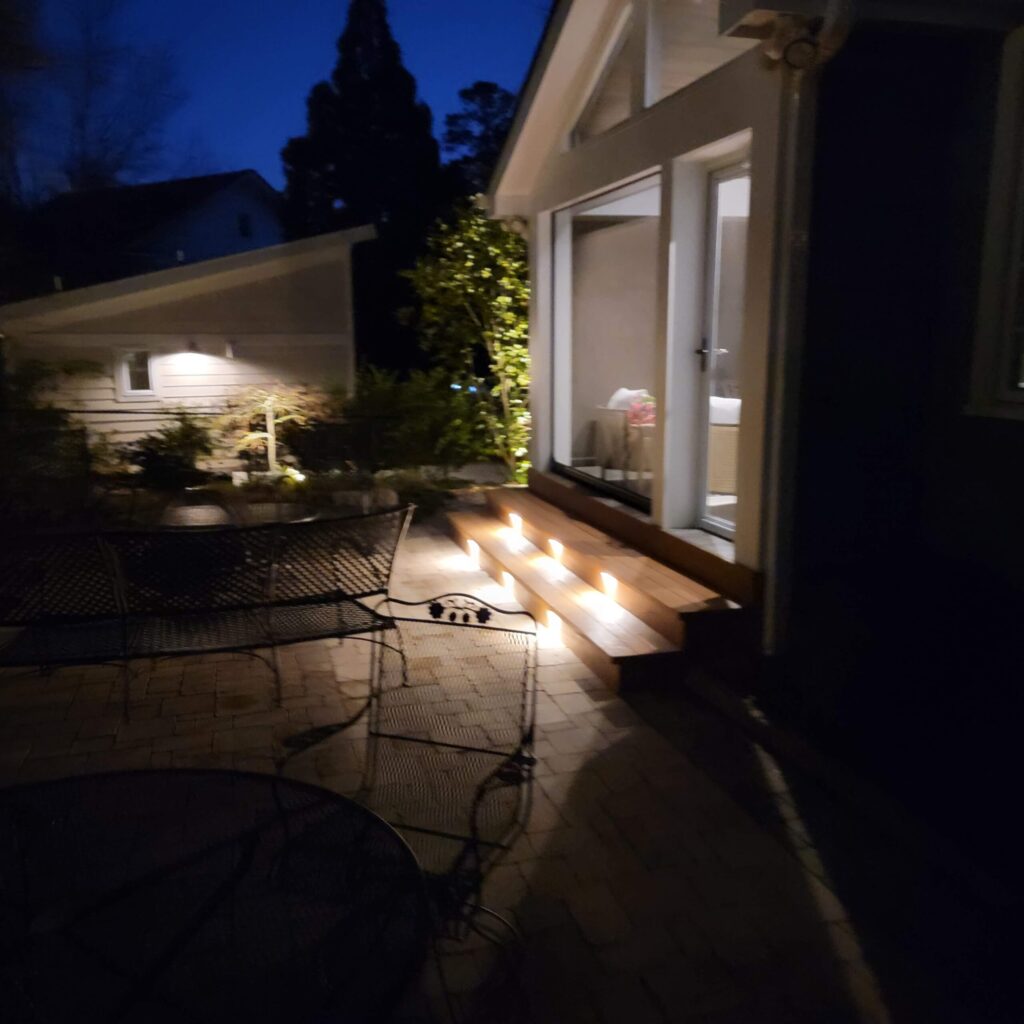
Steps, decks, and changes in elevation are the single most dangerous part of any yard after dark, and they deserve dedicated lighting. A step that blends into the shadows is nearly invisible at night, and a missed step can lead to a serious fall. Recessed riser lights installed into the face of each step throw a focused beam across the tread so the edge stands out clearly. Low profile fixtures mounted under a railing or along a stringer light the entire staircase without creating glare in anyone’s eyes. The aim is to make every level change obvious from several feet away, giving people time to adjust their footing. Soft, downward facing light works best here because it defines edges without washing out the whole area. This kind of detail is exactly what prevents the accidents that send people to the emergency room.
Deck lighting follows the same safety logic while adding comfort and usability to your outdoor living space. Lights set into the deck boards, along the perimeter, or beneath the railing cap outline the edges of the deck and keep guests from walking off into the dark. Post cap lights serve as both decorative accents and practical markers that show where the deck ends and the yard begins. Under bench and under rail strips give a gentle wash of light that is bright enough to move around safely yet soft enough to relax beside. Because decks see heavy foot traffic during summer gatherings, the fixtures must be rated for wet locations and built to handle weather, moisture, and temperature swings. Properly rated hardware also resists the corrosion that quickly ruins lights not made for outdoor use. The result is a deck that stays usable and safe long after sunset.
Wiring for step and deck lighting requires extra care because the fixtures sit close to where people sit, touch, and walk. All outdoor wiring and outlets must be protected, and any line voltage circuit serving an exterior space needs proper grounding and the right protective devices in place. Connections that hide inside a deck frame or step riser still need weatherproof enclosures, since trapped moisture leads to corrosion and eventual failure. An electrician routes the cable so it stays clear of fasteners, sharp edges, and spots where future repairs might disturb it. Doing this correctly avoids exposed wiring, prevents short circuits, and keeps the whole system safe to touch even when it is wet outside. Protecting your outdoor circuits is essential, and you can learn more about our GFCI outlet installation service here. Safe wiring underneath the surface is what keeps the lights above it reliable for years.
Motion Activated Landscape Lighting Ideas for a Safer Yard
Motion activated lighting adds a layer of security that fixed lighting alone cannot provide, and it is one of the smartest ideas for a safer yard. A bright light that snaps on when someone approaches a door, a gate, or a dark corner instantly removes the cover that an intruder relies on. The sudden change in brightness also alerts you and your neighbors that someone is moving around your property. These fixtures work best near entry points, garage doors, and along the sides of the home where people rarely have a reason to be at night. Because the lights only run when triggered, they use almost no energy while still standing guard around the clock. A well placed motion sensor can cover a wide area, so a few units often protect an entire yard. This combination of safety and efficiency makes motion lighting a favorite among homeowners.
Pairing motion sensors with steady, low level lighting gives you the best of both approaches. Your path and step lights provide constant, gentle illumination for everyday comfort, while the motion fixtures deliver a bright burst of security light when something moves. Adjustable settings let you control the sensitivity, the timing, and the range of each sensor so the lights respond to people rather than to passing cats or swaying branches. Dusk to dawn photocells make sure the system only activates after dark, which prevents the lights from running during daylight hours. Smart models connect to your phone, letting you check activity, change settings, and receive alerts from anywhere. This kind of control turns a simple light into a real security tool. The flexibility means the system fits the way your household actually lives.
Reliable motion lighting depends on correct placement, correct wiring, and the right power source for each fixture. Sensors aimed too high miss approaching people, while sensors aimed too low trigger constantly and waste their usefulness. Line voltage flood fixtures need a properly grounded circuit and a weatherproof box, and they must be protected by the right devices to stay safe in wet weather. An electrician positions each unit for full coverage, wires it into a dependable circuit, and tests the sensor range so it catches movement exactly where you want it. Battery powered units seem convenient at first, yet they fail at the worst times and demand constant attention. A hardwired system installed by a professional simply works every night without the worry. That dependability is the whole point of security lighting.
How Landscape Lighting Improves Yard Safety After Dark
Landscape lighting improves yard safety after dark in several distinct ways, and understanding them helps you build a smarter plan. Light reduces the physical hazards that cause falls, it discourages people who do not belong on your property, and it gives your family the confidence to use the yard at night. Each benefit comes from a different lighting strategy, so a complete design blends them together. Safety lighting is not about brightness alone; it is about placing the right light in the right spot for the right reason. When the design accounts for both accident prevention and security, the entire property becomes safer to live in and enjoy. The following sections explain how the science of good lighting protects the people you care about. Knowing the why behind each fixture makes every dollar of your investment work harder.
Landscape Lighting That Prevents Trips and Falls After Dark
The most immediate safety benefit of landscape lighting is the prevention of trips and falls, which are among the most common home injuries. Human eyes need light to judge depth, distance, and the position of edges, and darkness strips away all of those cues at once. A walkway that feels perfectly familiar in daylight becomes a guessing game at night, especially for older family members and young children. Even, consistent lighting along every path and step gives the eye the information it needs to place each foot with confidence. Removing shadows and dark gaps eliminates the surprise hazards that catch people off guard. The difference between a lit and an unlit path is often the difference between a normal evening and a trip to urgent care. This is why path and step lighting form the core of any safety focused design.
Glare and uneven lighting can actually create hazards rather than solve them, which is why thoughtful design matters so much. A single harsh spotlight casts deep shadows around its edges, and those shadows hide the very dangers the light was meant to reveal. Bright light pointed toward the eyes also causes temporary blindness, leaving a person unable to see the ground for several seconds. The fix is layered lighting that spreads soft illumination across the whole area instead of one intense beam in a single spot. Shielded fixtures direct their light downward onto walking surfaces, keeping the glow where it helps and out of people’s eyes. This balanced approach keeps the entire path visible and comfortable. Good lighting design works with the way human vision actually functions.
Weather and seasonal changes in New Hampshire make consistent lighting even more important throughout the year. Rain, fog, and snow all reduce visibility and make familiar surfaces slick and treacherous after dark. Snow piled along a walkway hides the edges and changes the layout people rely on, so clear lighting becomes critical during the long winter months. Fixtures rated for wet and cold conditions keep working when the weather turns, while cheaper lights quit exactly when they are needed most. Planning your lighting for every season, including the harsh ones, protects your family all year long. A system built for New Hampshire conditions does not take the winter off. That year round reliability is what makes the investment worthwhile.
Landscape Lighting That Deters Intruders After Dark
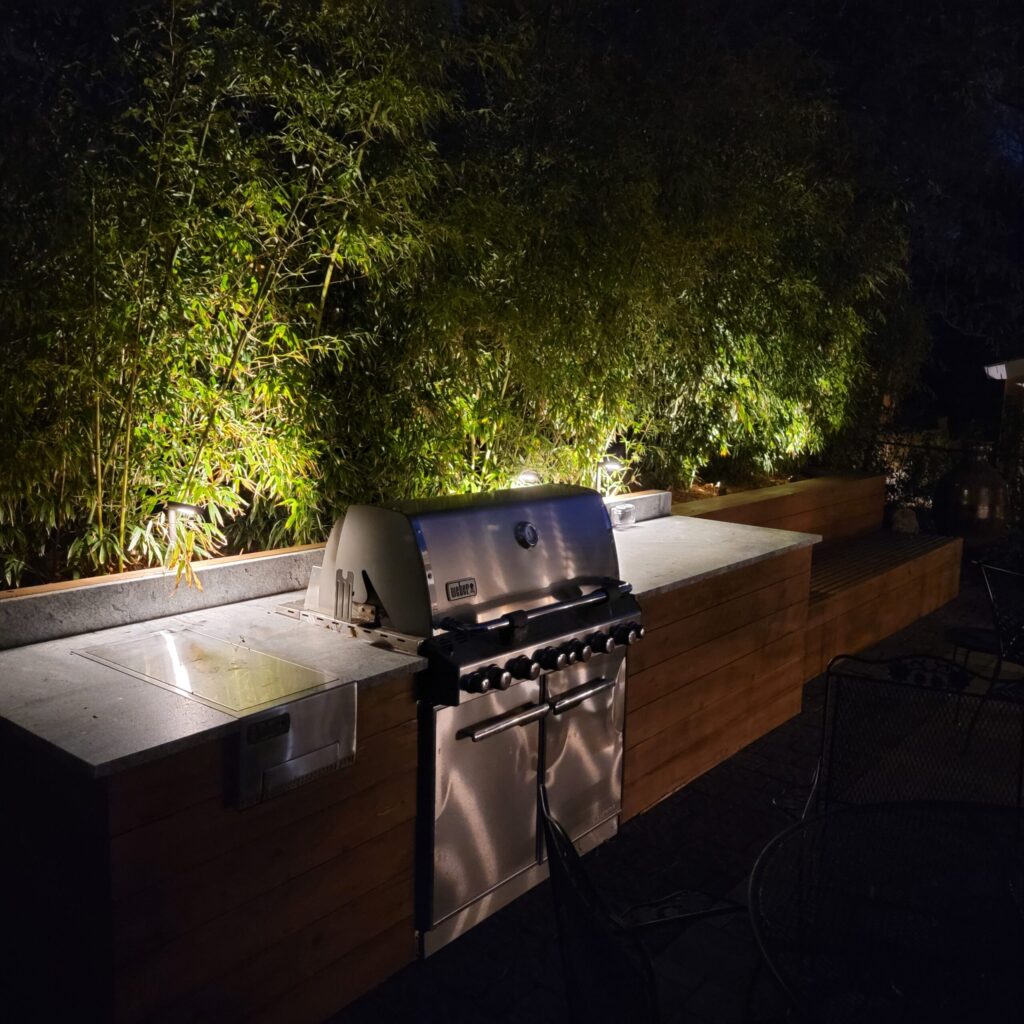
A well lit property is far less attractive to anyone with bad intentions, and this is one of the strongest security benefits of landscape lighting. Intruders depend on darkness to approach a home unseen, so a yard with no dark cover offers them nowhere to hide. Lighting around entry points, windows, and the perimeter of the home sends a clear message that the property is watched and cared for. Studies on home security consistently show that good exterior lighting is one of the simplest and most effective deterrents available. The presence of light alone often convinces an opportunist to move on to an easier target. This protection runs every night without any effort on your part once the system is installed. Security through lighting is both passive and powerful.
The combination of steady lighting and motion activated fixtures creates a layered defense that is hard to beat. Constant low level light keeps the property visible and removes the deep shadows where someone could lurk unnoticed. Motion sensors then add an active response, flooding an area with bright light the moment anyone steps into it. That sudden change draws attention, startles the intruder, and makes the property far more risky to approach. Lighting the sides and back of the home matters just as much as the front, since those areas often offer the most concealment. A complete perimeter plan leaves no easy point of entry in darkness. The yard becomes a place that protects itself after dark.
Security lighting also brings real peace of mind to the people living in the home. Arriving home to a dark driveway and a shadowed entrance feels uneasy, while a brightly lit approach feels safe and welcoming. Family members can step outside, check on a noise, or let the dog out without stepping into total darkness. The simple comfort of seeing clearly around your own home at night has real value, especially for households with children or older adults. Lighting that responds to movement also alerts you to activity you might otherwise miss entirely. That awareness lets you act before a small concern becomes a real problem. A well lit yard helps you feel secure in your own space every single night.
Landscape Lighting Installation and Wiring for Yard Safety
The safety benefits of landscape lighting depend entirely on correct installation, because faulty wiring outdoors creates serious hazards. Outdoor electrical systems face constant exposure to rain, snow, sprinklers, and ground moisture, all of which attack connections that are not properly sealed. Every outdoor receptacle and exterior circuit must include the protective devices required by code to guard against shock. Buried cable has to sit at the correct depth and follow safe routing so a shovel or a frost heave never exposes a live wire. Improper outdoor wiring can lead to shocks, short circuits, and even fires, which turns a safety upgrade into a danger. This is precisely the kind of work that calls for a licensed electrician. Correct installation is the foundation that every other safety benefit rests upon.
Transformers, circuits, and load calculations all play a role in a system that performs safely over the long term. A low voltage lighting system relies on a transformer that steps household current down to a safe level for the fixtures outside. That transformer must be sized for the total load of every fixture, with extra capacity reserved so the system is not pushed to its limit. Overloading a transformer shortens its life, dims the lights, and can create a fire risk in a cramped or poorly ventilated spot. Line voltage fixtures, meanwhile, demand properly grounded circuits and weatherproof enclosures at every connection. An electrician balances these loads and selects the correct components for a safe, lasting result. Proper engineering behind the scenes keeps the visible lights trouble free.
Many homeowners try to install landscape lighting themselves and run into problems that only show up later. Connections crimped without weatherproof seals corrode within a season, and undersized wire causes voltage drop that leaves distant fixtures dim. Cable buried too shallow gets cut by routine yard work, while overloaded circuits trip breakers or fail outright. These issues are frustrating, costly to fix, and sometimes dangerous if a live wire ends up exposed in a wet yard. A professional installation avoids all of these pitfalls by following code, planning the layout carefully, and testing the finished system. If your outdoor wiring already has problems, click here for our electrical repair service to get it corrected safely. Doing the job right protects your home, your family, and your investment.
Why You Need Professional Landscape Lighting Installation
Landscape lighting may look simple on the surface, yet a safe and lasting installation involves real electrical knowledge and skill. The wiring runs through wet ground, the circuits must meet code, and the whole system has to survive New Hampshire weather for years. A professional brings the training to design the layout, size the components, and install everything so it works the first night and every night after. Hiring an expert also protects your warranty, your property, and the safety of everyone who uses the yard. The sections below explain when to call a pro, what a professional installation includes, and why local homeowners trust our team. Making the right choice here saves money and worry for many years to come.
When to Call an Electrician for Landscape Lighting
You should call an electrician any time landscape lighting involves line voltage wiring, new circuits, or connections to your home’s electrical panel. These tasks carry a genuine risk of shock and fire when handled incorrectly, and they must follow local code to be safe and legal. A licensed electrician knows the burial depth requirements, the protective devices each circuit needs, and the proper way to seal every outdoor connection. Adding a new outdoor outlet or extending power to a far corner of the yard also falls squarely in professional territory. Trying to handle this work without the right training puts your home and your family at real risk. The cost of a professional is small next to the cost of a fire or an injury.
Even low voltage systems benefit from professional installation once the layout grows beyond a few simple fixtures. Long cable runs, multiple zones, and large transformers all require careful load calculation to perform correctly. An electrician prevents the voltage drop, overloading, and moisture problems that plague so many do it yourself attempts. If your existing lights flicker, fail, or trip a breaker, that is a clear sign something in the system needs professional attention. Problems like these rarely fix themselves and usually point to a wiring or load issue underneath. A trained eye finds the root cause quickly and corrects it the right way. That expertise turns a frustrating system into a reliable one.
Emergencies are another time when calling a professional is the only safe choice. Exposed wiring, sparking fixtures, repeated breaker trips, and water inside an electrical box are all signs of immediate danger. These situations should never wait, and they should never be handled by anyone without proper training. A licensed electrician can diagnose the hazard, make the area safe, and repair the fault correctly. If you ever face an urgent outdoor electrical problem, click here for our emergency electrician service for fast help. Acting quickly on these warning signs prevents a small fault from becoming a major event.

What Professional Landscape Lighting Installation Includes
A professional landscape lighting installation begins with a thoughtful design built around your property and how your family uses it. The electrician walks the yard, notes the paths, steps, and entry points, and plans fixture placement for both safety and beauty. From there, the team calculates the total load, sizes the transformer, and selects the correct wire gauge for every run. This planning stage is what prevents the dim fixtures, tripped breakers, and early failures that plague rushed installations. A clear plan also gives you an accurate picture of the cost and the finished result before any digging begins. Good design is the difference between a system that simply works and one that truly shines.
The installation itself follows code at every step to keep the system safe for the long haul. Cable is buried at the proper depth, routed away from hazards, and connected inside weatherproof enclosures that keep moisture out. Outdoor outlets and circuits receive the protective devices required for exterior use, and every line voltage connection is properly grounded. Fixtures are leveled, aimed, and tested so the light lands exactly where it belongs with no glare or dark gaps. The team checks the full system under real nighttime conditions to confirm even, reliable performance. This attention to detail is what separates a professional job from a weekend project. The finished system looks clean and performs flawlessly.
A quality installation also looks ahead to the years of service the system will provide. Professional grade fixtures made from brass, copper, or coated aluminum resist corrosion and survive New Hampshire winters without cracking or fading. Connections sealed against moisture stay reliable through rain, snow, and spring thaw. The electrician leaves room in the transformer and the circuit for future additions, so expanding the system later is simple. A clear explanation of the controls, timers, and sensors lets you run the system with confidence from day one. Quality materials and careful work mean fewer repairs and a longer life for everything you paid for. That long term value is exactly what a professional installation delivers.
Why Choose Whiting Electrical Services for Landscape Lighting
Whiting Electrical Services brings the experience, the craftsmanship, and the local knowledge that landscape lighting in New Hampshire demands. Our team designs and installs outdoor lighting systems that are safe, code compliant, and built to last through every season. We stand behind our work with a Lifetime Craftsmanship Warranty, and our A rating with the Better Business Bureau reflects the standard we hold on every job. Trusted by names like Mr. Beast and WillScot for electrical projects, we treat every home with the same care and attention to detail. We are also dedicated to providing a five star service every time, from the first walkthrough to the final test. That commitment is why so many local homeowners call us first for outdoor lighting.
We understand the conditions that New Hampshire yards face, and we build every system to handle them. From the long cold winters around Laconia to the busy summer evenings across the Lakes Region, our installations are made to perform year round. We use professional grade fixtures and proper wiring methods so your lights work the first night and keep working for years. As a fully licensed electrical company, we follow code on every circuit, connection, and outdoor outlet to keep your family safe. We also proudly offer a ten percent discount for veterans, first responders, and paramedics as a thank you for their service. Local experience and honest work are at the heart of everything we do.
When you are ready to make your yard safer and more beautiful after dark, our team is ready to help. We will walk your property, design a plan that fits your needs, and install a system you can rely on for years to come. Ready to light up your yard the right way? Click here for our outdoor lighting installation service and let us show you what professional work looks like. You can reach Whiting Electrical Services directly at (603) 512-3887 to schedule your free consultation today. Call us now and take the first step toward a safer, brighter yard this summer.