



What GFCI Outlets Do and Why They Matter
As you look around your home, you will likely notice two different kinds of electrical outlets. There is the standard, familiar duplex outlet that you see in your living room and bedrooms. Then there is that other kind, the one with the two small buttons, usually labeled “Test” and “Reset,” that you find in your kitchen, bathrooms, and on the exterior of your home. Most people have a general sense that this second type of outlet is a “safety outlet,” but they often do not understand what it is actually doing or why it is so critically important.
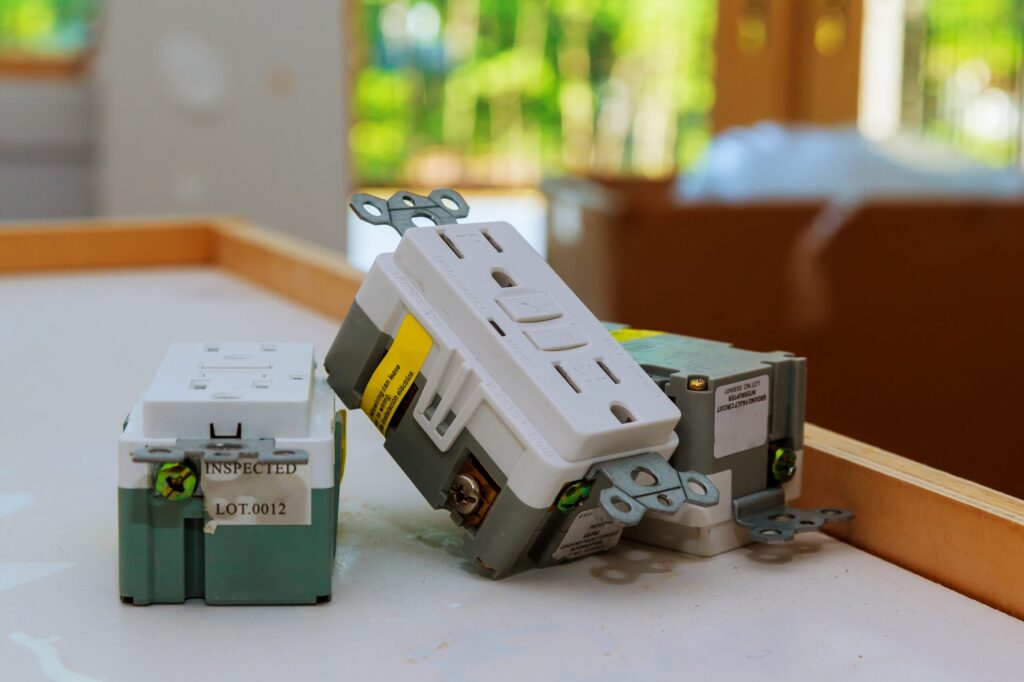
That special outlet is a Ground Fault Circuit Interrupter, or GFCI. It is a remarkable and fast-acting device that serves one primary purpose: to protect you and your family from a severe or even fatal electric shock. Understanding the fundamental difference between a standard outlet and a GFCI is a crucial part of home electrical safety. It is the difference between an outlet that is designed to protect your house and an outlet that is designed to protect your life.
The Limit of a Standard Outlet and Breaker
To understand why a GFCI is so necessary, it is important to first understand what a standard electrical outlet and its connected circuit breaker do, and more importantly, what they do not do. A standard outlet is a simple gateway to power. It is designed to provide a stable 120-volt path for electricity to flow to an appliance, and its only safety feature is its connection to the circuit breaker in your home’s main electrical panel.
The primary job of a circuit breaker is to protect the wiring inside your walls from overheating and causing a fire. A standard 15 or 20-amp breaker is designed to trip and shut off the power only when it detects a major problem, such as an overload (too many devices drawing too much power) or a short circuit.


Here is the critical limitation: the amount of electrical current that it takes to trip a standard circuit breaker is many, many times greater than the tiny amount of current that it takes to cause a fatal electric shock to a person. A standard breaker is designed to protect the physical structure of your house, not the people living inside it. This creates a dangerous “protection gap.” A situation could occur where a person is receiving a deadly shock, but because the amount of electricity is not enough to threaten the house wiring, the circuit breaker would not trip. A GFCI is specifically designed to fill this critical safety gap.
Ready to make the switch? Click here to learn more.
How a GFCI Provides Personal Protection
A Ground Fault Circuit Interrupter is a smart and incredibly sensitive safety device that is built directly into the outlet itself. Its one and only job is to do what a standard breaker cannot: to protect people from the specific danger of a ground fault, which is the most common cause of electrocution.
The best way to visualize how a GFCI works is to think of it as a tiny, hyper-aware accountant for your electricity. It has an internal sensor that is constantly and precisely measuring the amount of electrical current that is flowing out on the “hot” wire to power an appliance and the amount of current that is returning on the “neutral” wire to complete the circuit. In a normal, safe operating condition, these two amounts of current are perfectly balanced and exactly equal.
A “ground fault” is a dangerous situation where some of the electricity breaks away from this closed loop and finds an alternative, unintended path to the ground. This dangerous path could be through a frayed cord touching a metal sink, through a puddle of water, or, in the most critical scenario, through a person’s body.
The GFCI’s internal accountant instantly detects that some of the current is now missing; that the electrical flow is unbalanced. If it detects a mismatch of as little as 4 or 5 milliamps (a tiny fraction of one amp), it assumes that a dangerous leak is occurring. Within an astonishing 1/40th of a second, which is faster than you can blink, it trips and shuts off the power to the outlet. This action is so fast that it can stop the flow of electricity long before a dangerous amount can pass through a person’s body and affect their heartbeat, potentially saving a life.
Where the Code Requires GFCI Protection in Your Home
The National Electrical Code, or NEC, which sets the minimum safety standard for all electrical installations in the United States, has a very clear and simple guiding principle for where GFCI protection is required: anywhere that electrical devices are likely to be used in close proximity to water. Water is an excellent conductor of electricity, and its presence dramatically increases the risk of a ground fault and a fatal shock.


Because of this risk, the code mandates that GFCI outlets be installed in a number of specific locations in all modern homes. For any home built in recent years in Greenville, you are required by code to have GFCI protection for all of the outlets that serve your kitchen countertops. They are also required for all outlets in your bathrooms, in your garage, in any unfinished basements or crawl spaces, and for all outdoor receptacles on the exterior of your home. You will also find them in laundry areas and near wet bars.
It is very important to note that these safety requirements have been expanded by the NEC over the decades as our understanding of electrical safety has improved. If you live in an older home, it is very likely that it does not have GFCI protection in all of these now-required locations. While your home may have been considered “up to code” at the time it was built, it does not meet the much higher safety standards of today. Upgrading your outlets in these critical, wet locations is one of the most important safety improvements you can make.
Want to know if your home is “up to code”? Schedule your electrical inspection now.
GFCI Breakers and Downstream Protection
There are a few different ways that GFCI protection can be implemented in a home, and understanding these can help you identify if your home is properly protected.
The most common and recognizable form is the GFCI outlet itself, with the “Test” and “Reset” buttons located right on its face. However, a single GFCI outlet can also be wired in a special way to provide ground fault protection to other, regular-looking outlets that are connected “downstream” from it on the same circuit. For example, a single GFCI outlet in a bathroom can protect all the other outlets in that same bathroom. You can test this by plugging a lamp into a standard outlet and pressing the “Test” button on the nearby GFCI; if the lamp goes out, it is protected.
Another method of providing protection is with a GFCI circuit breaker. This is a special type of breaker that is installed in your main electrical panel. This single breaker provides ground fault protection for every single outlet and device on that entire circuit. If your home uses GFCI breakers, the outlets on that circuit may appear to be standard, unprotected outlets because the safety mechanism is located back at the panel.
How to Test Your GFCIs
A GFCI is a sensitive electronic device, and like any such device, its internal components can wear out and fail over time due to age, power surges, or simple wear and tear. It is not a “set it and forget it” component. The only way to know for sure that your GFCI is still ready to protect you and your family is to test it on a regular basis.
The testing process is simple and takes only a few seconds to perform. First, plug a small device that you can easily see, like a nightlight, a small lamp, or a phone charger, into the GFCI outlet and make sure that it turns on. Next, firmly press the “Test” button on the face of the outlet. You should hear a distinct click sound, the nightlight should immediately go out, and the “Reset” button should pop out. This confirms that the trip mechanism is working correctly. Finally, press the “Reset” button. The nightlight should come back on, indicating that the outlet is ready to be used again.
It is recommended that you perform this simple test on every single GFCI outlet in your home once a month. If you ever find a GFCI that does not trip when you press the “Test” button, or if you are unable to restore power to it by pressing the “Reset” button, the outlet is defective and is no longer providing any ground fault protection. It should not be used, and it should be replaced by a licensed electrician as soon as possible.
The difference between a standard outlet and a GFCI outlet is profound and essential to understand. A standard outlet and its breaker are designed to protect your home’s wiring from a fire. A GFCI outlet is designed to protect you and your family from a fatal electric shock.
In a state like North Carolina, with our humid climate and our love for outdoor living, GFCI protection is a non-negotiable component of a safe and modern home. We encourage you to take a few minutes to walk through your home and test all of your GFCI outlets. If you find any that are not working correctly, or if you discover that your kitchen, bathrooms, or outdoor areas are still equipped with outdated, unprotected outlets, it is time to make a critical safety upgrade. Contact the expert, licensed electricians at Whiting Electrical Services to ensure your Greenville home is up to the highest possible standard of electrical safety.