



Planning Lighting for a New Room
When you step into a newly designed room, your eye is immediately drawn to the furniture, the color of the walls, and the texture of the flooring. These are the tangible elements that define the style of a space. However, there is an invisible element that has a more profound impact on how the room feels and functions than any piece of furniture ever could. That element is lighting. Lighting is the medium through which we experience our home. It sets the mood, defines the boundaries of the space, and facilitates the activities we perform there. Yet, for many homeowners in Greenville, lighting is treated as an afterthought. It is often reduced to a single ceiling fan fixture in the center of the room or a few lamps scattered in the corners.
True lighting design is an art and a science. It goes beyond simply ensuring a room is not dark. It involves understanding how light interacts with surfaces, how it affects human psychology, and how it can be manipulated to create different atmospheres for different times of day. Whether you are building an addition, finishing a basement, or simply remodeling a bedroom, planning the lighting should be one of the very first steps in the design process. It requires a strategic approach that considers the function of the room, the architecture of the house, and the technical requirements of modern electrical systems. By giving lighting the attention it deserves, you can transform a flat, uninspiring box into a dynamic and inviting sanctuary.
The Philosophy of Layered Lighting
The cardinal rule of professional lighting design is to never rely on a single source of light. A single overhead fixture creates a flat, harsh illumination that casts unflattering shadows on faces and leaves the corners of the room in darkness. This creates a “cave effect” that makes a room feel smaller and less welcoming. To achieve a balanced and comfortable environment, you must employ a strategy known as layering. This involves combining three distinct types of lighting: ambient, task, and accent.
Ambient lighting is the foundation of your plan. It is the general illumination that provides a comfortable level of brightness for safe navigation and general living. In the past, this was done with a central chandelier or flush mount fixture. Today, in modern Greenville renovations, ambient lighting is often achieved through a grid of recessed “can” lights. These fixtures tuck neatly into the ceiling, providing an even wash of light without visual clutter. The goal of ambient lighting is not to be the star of the show, but to provide a canvas upon which the other layers can build. It simulates natural daylight and ensures that there are no harsh contrasts between light and dark areas in the room.

Task lighting is the second layer, and it is purely functional. It is designed to provide focused, high-intensity light where you need it most. In a kitchen, ambient light might help you walk across the room, but it will cast a shadow on the counter when you stand at the sink or the cutting board. Task lighting solves this. Under-cabinet lighting strips, pendant lights over an island, or a reading lamp beside an armchair are all examples of task lighting. This layer ensures that you can perform specific activities like cooking, reading, applying makeup, or working on a laptop without straining your eyes. It adds depth to the room by creating pools of brighter light within the general ambient wash.
Accent lighting is the final layer, often referred to as the jewelry of the room. Its purpose is decorative and dramatic. Accent lighting is used to draw attention to specific architectural features, artwork, or textures. It adds visual interest and directs the eye to the focal points of the design. This could be a directional gimbal light that washes a brick fireplace in a warm glow, track lighting that highlights a gallery wall of family photos, or LED tape light hidden in a tray ceiling to create a soft halo effect. Without accent lighting, a room can feel utilitarian. With it, a room feels curated and sophisticated.
Choosing the Right Color Temperature
Once you have determined the layers of light, you must decide on the quality of that light. This is measured in “color temperature,” which is expressed in degrees Kelvin. The color temperature of a bulb dictates whether the light appears warm and yellow or cool and blue. This choice has a massive impact on the atmosphere of the room and must be consistent across all fixtures to avoid a clashing, disjointed look.
Need an interior lighting install? Click here for our interior lighting installation service.
For most residential living spaces in Greenville, such as living rooms, bedrooms, and dining rooms, a warm color temperature is preferred. This is typically in the range of 2700K to 3000K. This range mimics the soft, inviting glow of traditional incandescent bulbs or candlelight. It promotes relaxation and makes skin tones look natural and healthy. If you go too cool in these spaces, the room can feel sterile, clinical, or like a hospital waiting room. A cozy evening with the family feels much better under warm 2700K light than under harsh, blue-white light.
However, there are areas where a cooler, crisper light is beneficial. In workspaces like a home office, a garage workshop, or a laundry room, a color temperature of 3500K to 4000K can help improve concentration and visibility. This “neutral white” light provides better contrast, making it easier to read fine print or spot stains on clothing. It is energetic and clean. The key is to match the temperature to the function. Mixing a 2700K lamp with a 5000K ceiling fixture in the same room creates a visual dissonance that is subconsciously agitating. When we plan a lighting package, we ensure that every LED bulb and integrated fixture is specified to a harmonious color temperature that suits the room’s purpose.
The Power of Control and Dimmers
A well-lit room is adaptable. The lighting needs of a space change drastically from morning to night. At 8:00 AM, you might need full brightness to find your keys and get ready for work. At 8:00 PM, you want a softer, more subdued atmosphere for watching a movie or winding down. This flexibility is achieved through lighting controls, specifically dimmer switches. Installing lights without dimmers is one of the biggest missed opportunities in home design.

Every main lighting circuit in a new room should be on a dimmer. This gives you instant control over the intensity of the light. Dimmers not only extend the life of your bulbs and save energy, but they also allow you to “scene set.” You can lower the ambient recessed lights to a faint glow while keeping the accent lights on the fireplace bright, creating a dramatic and cozy mood. Without dimmers, your lighting is binary: on or off. With dimmers, you have an infinite range of possibilities.
We also encourage homeowners to consider smart lighting controls. Smart switches replace standard dimmers and allow you to control your lights from a smartphone or via voice commands. You can program schedules so that the lights automatically adjust based on the time of day. For example, you can have the bedroom lights slowly fade up in the morning to wake you gently, or have the kitchen lights turn off automatically at midnight. These systems add a layer of convenience and security that modern homeowners love. Integrating these controls requires proper wiring planning, specifically ensuring that neutral wires are present in every switch box, which is something we verify during the rough-in phase.
Placement and Spacing of Recessed Lighting
Recessed lighting is the workhorse of modern lighting design, but it is easy to get wrong. A common mistake is the “Swiss cheese” effect, where too many lights are punched into the ceiling without a clear plan, or the “spotlight” effect, where lights are placed too far apart, creating pools of light and dark shadows. Proper placement requires calculation and an understanding of the beam spread of the fixture.
As a general rule of thumb, we divide the ceiling height by two to determine the spacing between lights. For an eight-foot ceiling, recessed lights should generally be placed about four feet apart. However, this is just a starting point. We also have to consider the edges of the room. Lights should not be placed too close to the wall, or they will create a harsh scallop shape on the drywall. Conversely, if they are too far away, the corners of the room will be dark. We typically aim to place the first row of lights about three feet off the wall to wash the wall with light, which makes the room feel larger.
We also have to navigate the structural elements of the ceiling. Joists, HVAC ductwork, and plumbing pipes are hidden behind the drywall. During the planning phase, we have to determine where these obstacles are to ensure our symmetrical lighting grid is actually buildable. In a kitchen, placement is critical relative to the cabinets. If a recessed light is placed behind the user while they are standing at the counter, they will be working in their own shadow. The lights must be positioned directly over the edge of the counter to provide effective task illumination.
Fixture Selection and Scale
While recessed lights are meant to disappear, decorative fixtures like chandeliers, pendants, and sconces are meant to be seen. They are part of the room’s decor. Choosing the right fixture involves more than just picking a style you like; it involves getting the scale right. A tiny chandelier in a massive two-story great room will look lost and insignificant. A massive pendant light over a small breakfast table will feel overwhelming and claustrophobic.
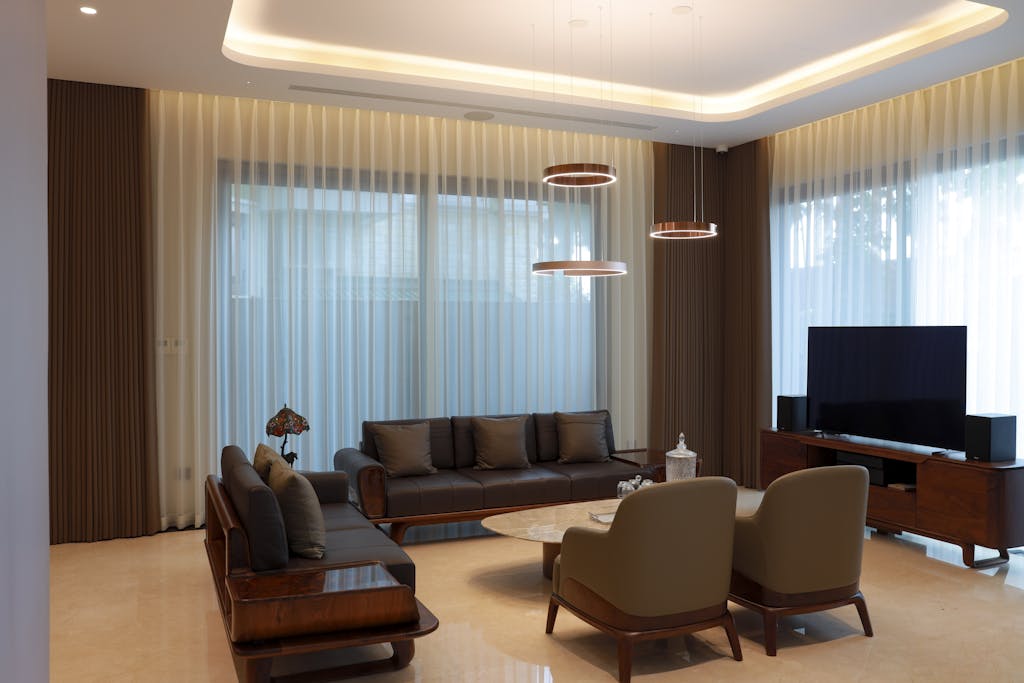
For dining rooms, a common guideline is that the chandelier should be about one-half to two-thirds the width of the table. It should be hung so that the bottom of the fixture is thirty to thirty-six inches above the table surface. This ensures it provides intimate light for dining without blocking the view across the table. For kitchen islands, pendants are usually spaced about thirty inches apart, leaving enough room so the space doesn’t feel cluttered.
The finish of the fixtures should also coordinate with other hardware in the room, such as door handles and cabinet pulls. However, they don’t have to match perfectly. Mixing metals, like matte black and brushed brass, can create a modern, layered look. The style of the fixture should complement the architecture of the home. A sleek, minimalist LED ring might look perfect in a modern downtown Greenville condo but out of place in a historic bungalow in the grid. We help guide these selections to ensure the electrical boxes are rated for the weight of the chosen fixtures and positioned to center them perfectly within the space.
Planning for Electrical Loads and Circuits
The most beautiful lighting plan in the world is useless if the electrical system cannot support it. Adding a new room or significantly upgrading the lighting in an existing one changes the electrical load calculation of your home. Before we drill a single hole, we have to evaluate the capacity of your main electrical panel.
Want to know the signs you need a panel upgrade? Click here for more information.
LED lighting has made this easier, as LEDs draw a fraction of the power of old incandescent bulbs. You can run twenty LED recessed lights on the same amount of power as two old 100-watt bulbs. However, we still prefer to separate lighting circuits from outlet circuits. This prevents a tripped breaker caused by a vacuum cleaner from plunging the room into darkness. We also like to separate lights by room or zone. You don’t want the kitchen lights and the living room lights on the same breaker if you can avoid it, as it offers better isolation for maintenance.
We also have to plan for the physical wiring paths. In a new construction or “down to the studs” renovation, this is straightforward. We run the wires through the open walls. But if you are adding lighting to a finished room, the challenge increases. We have to fish wires through ceilings and walls with minimal damage. This often involves cutting strategic access holes. A professional electrician plans these routes carefully to minimize the amount of drywall patching and painting required after the installation is complete.
Exterior Lighting Transitions
When planning lighting for a new room, especially one that connects to the outdoors like a sunroom or a family room with patio doors, you should consider the transition to the exterior. The glass in windows and doors turns into a black mirror at night if it is dark outside and bright inside. This can feel unsettling. By adding exterior lighting to the patio, deck, or landscape outside the new room, you extend the visual boundaries of the space.
We often plan switching for exterior lights near the entrance to the new room. We might install soffit lights in the overhangs outside the windows to wash the exterior walls, reducing the reflection in the glass. This blurs the line between indoor and outdoor living, which is a key feature of comfortable Southern homes. It also adds a layer of security, illuminating dark corners of the yard that are visible from the new room.
Lighting is a powerful tool that shapes our experience of a home. It can make a small room feel spacious, a cold room feel cozy, and a chaotic room feel organized. Planning the lighting for a new room is not a task to be rushed or delegated to the lowest bidder. It requires a thoughtful blend of aesthetic vision and electrical engineering. It is about anticipating how you will live in the space and providing the illumination to support those moments.
By considering the layers of light, the color temperature, the control systems, and the placement of fixtures, you can elevate your renovation from a simple construction project to a true design success. At Whiting Electrical Services, we understand that we are not just installing bulbs and wires; we are installing the atmosphere of your future memories. If you are planning a new room or a renovation in Greenville, let us help you bring your vision to light with safety, precision, and style.