

Light Switch Issues and What They Mean
The simple light switch is the most used mechanical device in your home. We interact with it dozens of times a day without a second thought. It is the gatekeeper of our electricity, allowing us to control the flow of power to our lights and fans with a casual flick of a finger. Because these devices are so reliable and so simple to operate, we often forget that they are mechanical components subject to wear and tear. We also forget that they are handling live electrical current every time we touch them. When a light switch begins to behave strangely, it is easy to dismiss the behavior as a minor annoyance or a quirk of an old house.
Ignoring these signs is a mistake. A light switch that is not functioning perfectly is a light switch that is failing. In the world of electricity, failure often results in heat, sparks, and potential fire hazards. The symptoms your switch presents are a language. They are telling you exactly what is going wrong inside the wall. Understanding what these sounds, feelings, and visual cues mean is the first step in maintaining a safe electrical system. For homeowners in Greenville, recognizing these warning signs can prevent a small repair from turning into a major emergency.
The Switch Makes a Buzzing or Crackling Sound
Electricity should be silent. When it flows through a properly installed circuit with tight connections, it moves without making a sound. If you flip a switch and hear a buzzing, humming, or crackling noise, you are hearing the sound of an electrical fault. This is one of the most serious warning signs a switch can give you.
The sound is typically caused by arcing. Arcing occurs when the electricity jumps across a gap between two contacts rather than flowing smoothly through a continuous connection. Inside a light switch, there are metal contacts that snap together when you flip the lever up. Over years of use, these contacts can become pitted, carbonized, or loose. When they no longer make a solid connection, the electricity arcs across the microscopic gap. This arc creates heat and the audible sizzling sound you hear.
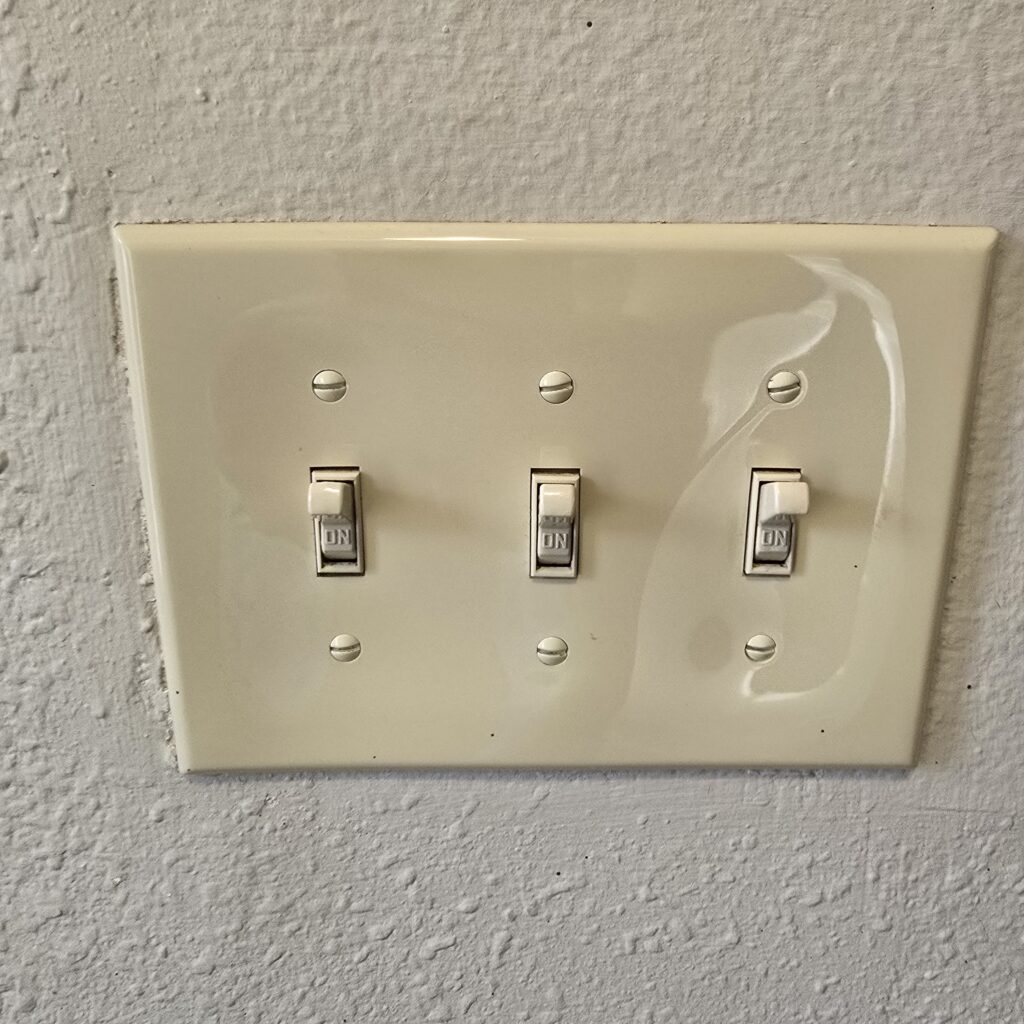
Another cause for this noise is a loose wire connection on the side of the switch. If the screw terminal holding the black wire is not tightened to the correct torque, or if the wire has been wrapped around the screw backward, the connection can loosen over time due to thermal expansion and contraction. The loose wire vibrates slightly as the current passes through, creating an arc and a buzzing sound. This arcing generates intense heat that can melt the plastic housing of the switch and eventually ignite the insulation on the wire or the wood framing of the wall. If your switch is making noise, it is a fire hazard and needs to be replaced immediately.
The Switch Feels Warm to the Touch
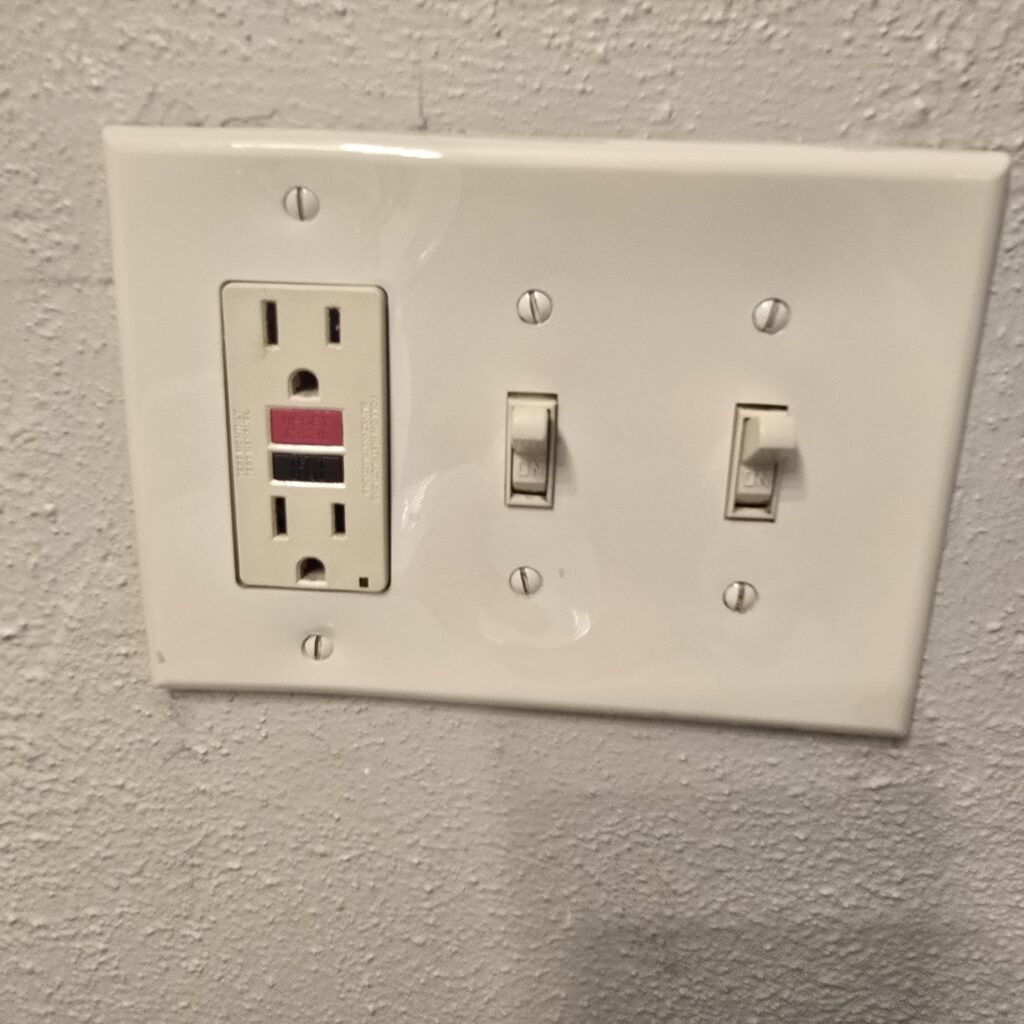
Touching a light switch plate and finding it warm can be alarming. To determine if this is a problem, you must first identify what type of switch it is. A standard toggle switch, the kind that simply flips on and off, should never feel warm. It is a mechanical gate that is either open or closed. It creates almost zero resistance to the electrical flow. If a standard switch is hot, it means there is significant resistance inside the switch or at the connection points.
Resistance generates heat. In a standard switch, this heat usually comes from a loose connection or an internal failure of the contacts. It can also indicate that the switch is overloaded. Every switch has an amperage rating, typically 15 amps for residential lighting. If someone has tapped into that switch leg to power a high draw appliance or too many light fixtures, the current flowing through the switch may exceed its rating. This excess current heats up the metal components. A hot standard switch is a sign of immediate failure and should be turned off and investigated.
Need a light switch fixed? Click here for our electrical wiring service.
Dimmer switches operate differently. A dimmer works by rapidly chopping the electrical signal to the light bulb, turning the light on and off 120 times a second to create the illusion of dimness. This process relies on internal electronic components called triacs. These components naturally generate a small amount of heat as a byproduct of their operation. Therefore, it is normal for a dimmer switch to feel slightly warm to the touch, especially if it is running a large number of lights at full brightness. However, it should never be too hot to touch. If a dimmer is painfully hot or smells like burning plastic, it is overloaded or failing and must be replaced.
Lights That Flicker or Blink
Flickering lights are often blamed on the light bulb itself, and sometimes that is the culprit. A loose bulb in a socket will flicker. However, if you have tightened the bulb or replaced it and the flickering persists, the problem likely lies in the switch. This is a classic symptom of a loose connection.
When the metal contacts inside the switch wear out, they lose their spring tension. They may no longer snap together firmly. This weak contact allows the flow of electricity to be intermittent. Even a vibration from someone walking nearby or a door slamming can cause the contacts to bounce slightly, causing the lights to flicker.
The problem can also be at the wire termination. Greenville has many homes built during eras where different wiring methods were used. If the wires connected to the switch are merely pushed into the “stab” holes on the back of the device rather than wrapped around the screw terminals, they are prone to becoming loose. These “backstabbed” connections are notorious for failing over time. As the connection degrades, the power cuts in and out, creating the flicker. This is not just an annoyance; it is a precursor to arcing and overheating. A professional electrician will always use the side screw terminals or a specialized clamping plate to ensure a secure, long term connection.
The Switch Handle is Loose or Floppy
The satisfying “snap” you feel when you flip a light switch is created by an internal spring mechanism. This spring ensures that the contacts slam shut quickly to minimize arcing and hold them firmly in place. Over thousands of cycles, this mechanical spring can fatigue or break.
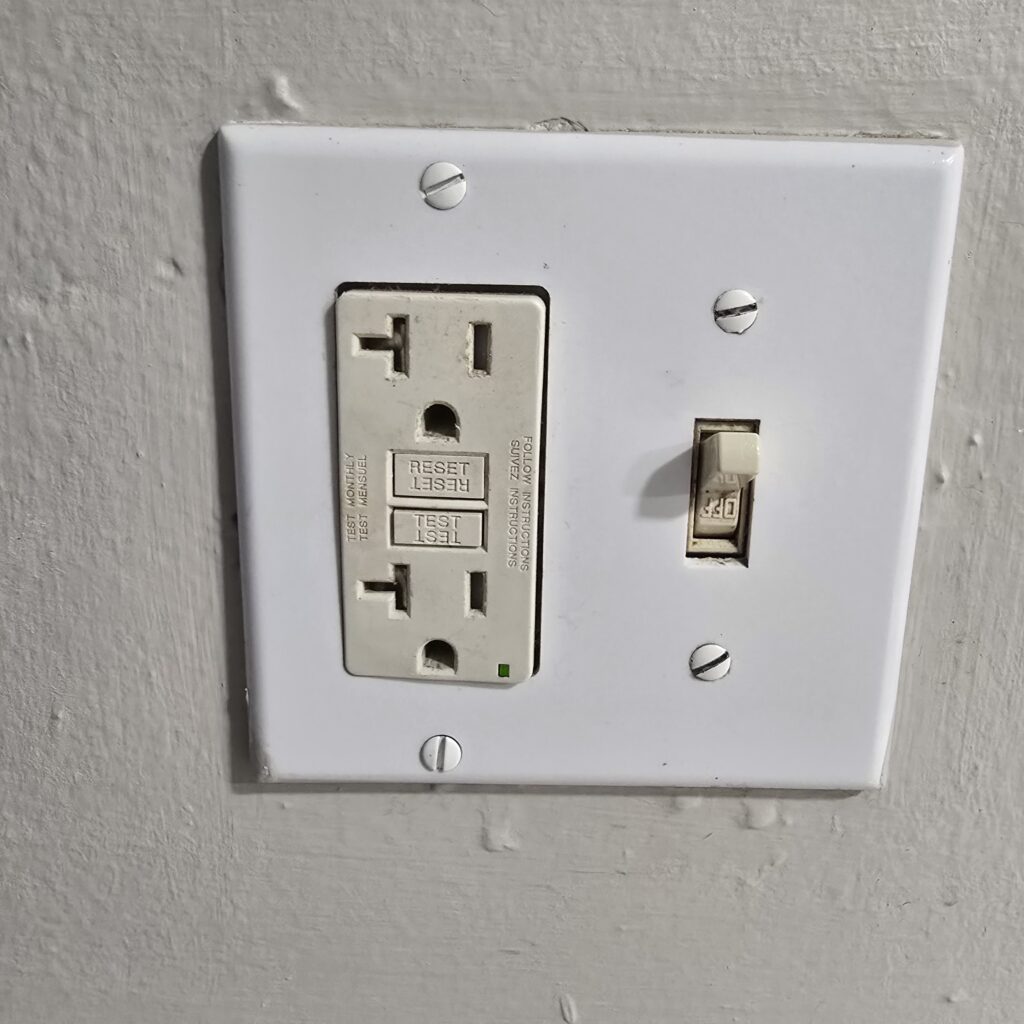
When this happens, the toggle handle on the outside of the switch loses its tension. It might feel loose, floppy, or fail to stay in the “on” or “off” position. You might have to jiggle the handle to get the lights to turn on, or hold it in a specific spot. This is a clear sign of mechanical failure.
Using a switch in this condition is dangerous. If the spring is broken, the contacts inside may not be opening or closing fully. They might be hovering just barely apart, creating a constant arc, or barely touching, creating high resistance and heat. Some homeowners attempt to solve this by using tape to hold the switch in place. This is a dangerous temporary fix that ignores the internal fire hazard. A switch that has lost its “snap” has reached the end of its life cycle and must be swapped out for a new unit.
Delayed Ignition of Lights
You flip the switch, and nothing happens for a second or two, then the lights suddenly pop on. This delay is rarely a ghost; it is a symptom of failing components. While this can sometimes be caused by the ballast in older fluorescent fixtures or the driver in cheap LED bulbs, it can also point to the switch itself.
If the contacts inside the switch are heavily corroded or carbonized from years of arcing, they create a layer of resistance. When you flip the switch, the electricity has to overcome this resistance to establish a solid path. This can cause a momentary delay or require the switch to be toggled a few times to scrub the contacts clean enough to pass current.
In the case of failing contacts, the switch is operating on borrowed time. The resistance will continue to build until the switch stops working entirely or overheats. If you rule out the light bulbs and fixtures, the switch is the next logical suspect. It is a simple component to replace, and doing so restores instantaneous control and safety to the circuit.
Sparks When Flipping the Switch
Seeing a spark come from inside the switch box when you turn off the lights can be startling. To understand if this is dangerous, you need to understand the physics of electricity. When you break a circuit that is under load, the electricity wants to keep flowing. As the contacts separate, a tiny arc is naturally created for a split second before the gap becomes too wide.
Want to know how often you should have an electrical inspection? Click here for more information.
In a dark room, seeing a tiny, faint blue flash inside the switch housing is often normal, especially if the switch controls a large load. This is the “snap” of the electricity being cut. However, this spark should be contained and minimal.
If you see a large yellow or orange spark that pops out of the switch, or if the spark is accompanied by a loud pop or the smell of smoke, this is not normal. A large spark indicates that the contacts are pitted and rough, causing a larger, hotter arc. It can also indicate a loose wire that is arcing against the side of the metal box or the ground wire. This type of sparking is a fire starter. It can ignite the dust and lint that accumulates inside electrical boxes over the years. If a switch sparks aggressively, stop using it immediately and tape over the toggle until a professional can replace it.
Issues with Dimmer Compatibility
The transition to LED lighting has been fantastic for energy efficiency, but it has caused a headache for lighting controls. Older dimmer switches were designed for incandescent bulbs. Incandescent bulbs are simple resistive loads; you lower the voltage, the filament cools down, and the light dims.
LEDs are complex electronic devices. They do not dim in the same linear way. If you use an old incandescent dimmer with new LED bulbs, you will often experience problems. The lights might flicker or strobe at certain dimming levels. They might drop out completely at the low end of the range. You might hear a buzzing sound coming from the bulbs themselves or the switch.
This is a compatibility issue. The old dimmer chops the electrical wave in a way that confuses the driver electronics inside the LED bulb. To fix this, you need to install a modern dimmer switch that is rated for LED/CFL loads. These modern dimmers have adjustment dials that allow you to calibrate the dimming range to the specific bulbs you are using, ensuring smooth, flicker free performance from full brightness down to a soft glow.
Three Way Switch Confusion
A three way switch setup allows you to control a light from two different locations, like the top and bottom of a staircase. These circuits are more complex than standard switches. They rely on “traveler” wires to pass the current between the two switches.
A common issue arises when the switches fall out of sync or fail. You might find that the light will only turn on if one switch is in the “up” position. Or perhaps flipping one switch kills the power to the other switch entirely. This is usually a sign of a failed switch or an incorrect wiring job.
Inside a three way switch, there are moving parts that direct the current to one of two traveler terminals. If the internal mechanism breaks, it might not make contact with either traveler, breaking the chain. Alternatively, if a DIY attempt was made to replace these switches, it is very common to mix up the common wire with the traveler wires. Diagnosing a three way switch fault requires tracing the circuit and identifying the specific failure point. It is a logic puzzle that often stumps non professionals.
The Dangers of Aluminum Wiring
For homes in Greenville built in the late 1960s and early 1970s, there is a specific and serious concern: aluminum wiring. During this period, copper prices were high, and builders used aluminum wiring as a cheaper alternative. Aluminum is a good conductor, but it has different properties than copper. It expands and contracts more with heat, and it oxidizes more easily.
If you have aluminum wiring, you cannot use standard light switches bought at the hardware store. Standard switches are rated “CO/ALR” only if specifically marked, but most are rated for copper only. Connecting aluminum wire to a standard copper rated switch causes a chemical reaction and physical loosening that leads to severe overheating and fire.
If your switch is warm, buzzing, or melting and you have aluminum wiring, the situation is critical. You must use specialized switches rated for aluminum, or have a licensed electrician perform a “pigtail” repair using specialized alumiconn connectors to safely transition from aluminum to copper before connecting to the device. This is not a DIY task; it requires specific torque tools and knowledge to ensure safety.
A light switch is more than a piece of plastic on the wall; it is a critical control point for the high voltage system in your home. When it starts to hiss, pop, spark, or heat up, it is sending you a distress signal. These issues are rarely self correcting. They are indications of degradation, resistance, and potential failure. In the worst case scenarios, they are the early warning signs of an electrical fire.
Do not ignore the quirks of your electrical system. If a switch feels wrong, sounds wrong, or looks wrong, it is time to address it. Replacing a switch may seem simple, but ensuring it is wired correctly, grounded properly, and matched to the load is a job for a professional. Protect your home and your family by taking these signs seriously. Contact a licensed electrician like Whiting Electrical Services in Greenville, NC, to diagnose your lighting control issues and ensure your switches are safe, silent, and reliable every time you enter the room.