

Common Causes of Arc Faults and How to Prevent Them
Electricity is a silent force that powers nearly every aspect of our modern lives. It runs through the walls of our homes in Greenville, feeding our lights, appliances, and entertainment systems. Because it is so reliable, we often take it for granted. We flip a switch, and the light comes on. We rarely stop to think about the complex network of copper wires and connections that makes this possible. However, within this hidden network lies a potential danger that is responsible for thousands of residential fires every year across the United States. This danger is known as an arc fault. Unlike a standard short circuit or an overload, an arc fault can be subtle, silent, and incredibly destructive.
Understanding what an arc fault is requires visualizing how electricity moves. In a properly functioning circuit, electricity flows smoothly along a continuous path of wire, like water flowing through a pipe. An arc fault occurs when that path is broken or compromised. If a wire is damaged or a connection is loose, the electricity attempts to jump across the gap to continue its journey. This jump creates a luminous electrical discharge known as an arc. It is essentially a small, sustained lightning bolt happening inside your wall or inside an appliance cord. This arc generates intense heat, often exceeding ten thousand degrees Fahrenheit. This temperature is easily hot enough to melt the surrounding wire insulation and ignite the wood framing, drywall paper, or dust within the wall cavity.
The Mechanics of an Electrical Arc
To prevent arc faults, it helps to understand exactly what is happening at the microscopic level. An arc is not just a spark; it is a plasma channel. When the connection between two conductors is loose or intermittent, the air between them becomes ionized. This ionized air conducts electricity, allowing the current to flow through the gap. This process is erratic. It causes the current to spike and dip rapidly, creating a unique electrical “signature” or waveform.
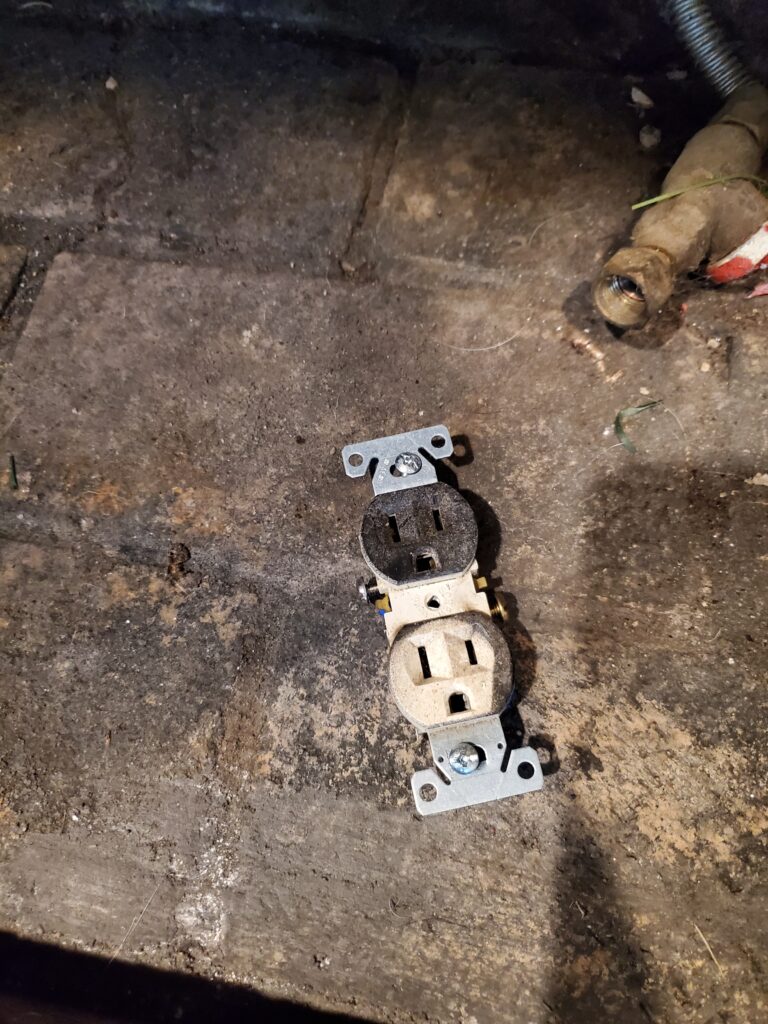
There are two main types of arc faults that homeowners should be aware of. The first is a parallel arc fault. This happens when the insulation between two different wires, such as the hot wire and the neutral wire, is damaged. The electricity arcs sideways from one wire to the other. This often happens when a nail is driven through a cable or when a cord is pinched. The second type is a series arc fault. This occurs along a single wire. If a wire is frayed or if a screw terminal is loose, the electricity has to jump across the break in the single conductor to keep flowing. Series arcs are particularly dangerous because they often do not draw enough current to trip a standard circuit breaker. A standard breaker is designed to stop a massive surge of power, like a short circuit, but it might see a series arc as a normal load, like a lamp being turned on, allowing the fire-starting arc to continue unchecked.
The heat generated by this process is localized but intense. It breaks down the chemical structure of the insulation surrounding the wire, turning it into carbon. Carbon is a conductor of electricity. This creates a phenomenon known as “carbon tracking,” where the electricity finds a new, easier path through the burnt insulation. This accelerates the heating process and creates a feedback loop that almost inevitably leads to ignition if the power is not cut.
The Danger of Loose Connections
One of the most common causes of arc faults in Greenville homes is a loose electrical connection. Electrical systems are subject to physical laws, including thermal expansion and contraction. When current flows through a wire, it generates a small amount of heat. This causes the metal wire to expand. When the current stops, the wire cools and contracts. Over years of turning lights on and off, this constant expanding and contracting can work screw terminals loose.
Need a GFCI outlet install? Click here for our GFCI outlet installation service.
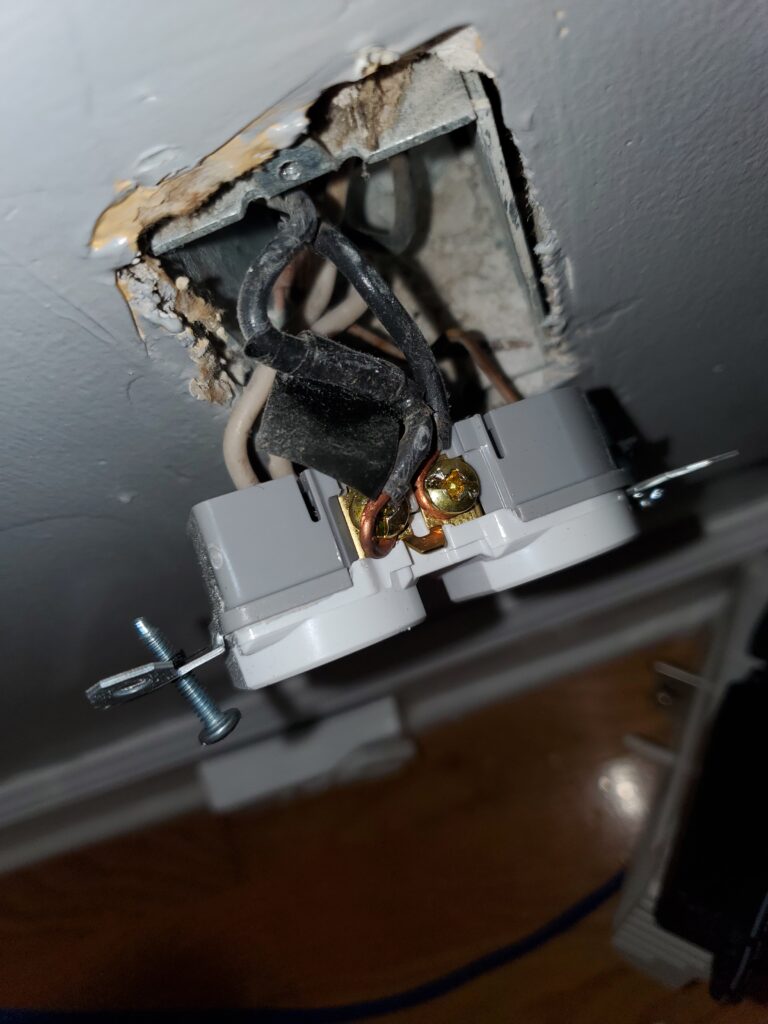
This is frequently seen at outlets and switches. If the screw holding the wire to the side of the outlet is not tightened to the correct torque specification during installation, it will eventually loosen. As the contact pressure decreases, resistance increases. The electricity begins to arc across the microscopic gap between the wire and the screw. This creates a buzzing sound and heat that can melt the face of the outlet. This is why you might sometimes see a receptacle that looks scorched or discolored.
Another common culprit is the “backstab” connection found on the back of many residential switches and outlets. These are push-in holes that use a small internal spring to hold the wire. While they are legal and faster for installers, they are generally considered less reliable than side screw terminals. The spring tension can fail over time, or the wire can wiggle loose due to the vibration of plugging and unplugging devices. When that connection becomes loose, it becomes a prime location for series arcing.
Physical Damage to Wiring
The walls of your home protect the wiring, but they are not armor. Wiring is often damaged inadvertently by homeowners performing simple maintenance or decoration tasks. The classic example is hanging a picture or mounting a shelf. You find a stud, grab a hammer and a nail, and drive it into the wall. If an electrical cable is stapled to the side of that stud, the nail can puncture the protective sheathing and nick the copper wire inside.
This damage might not cause an immediate problem. If the nail hits the wire just right, it might sever a few strands of the copper but leave the circuit functioning. However, the capacity of the wire is now reduced at that specific point. Over time, as current flows through the damaged section, it creates a hot spot. The electricity may begin to arc from the wire to the nail, or between the severed strands of copper. Because this is happening inside the wall, you will never see the smoke until the fire breaks out.
Rodents are another major cause of physical damage to wiring. Squirrels, mice, and rats have teeth that never stop growing, and they need to gnaw on things to keep them filed down. Unfortunately, the plastic insulation on electrical wire seems to be a favorite target. In attics and crawlspaces, pests can chew the insulation completely off the wires, leaving bare copper conductors exposed. If these bare wires touch each other or a metal junction box, they arc. This is a frequent issue in older homes with accessible attics.
The Hidden Threat of Furniture and Doors
Arc faults are not always caused by the wiring inside the walls; they are often caused by the cords and plugs we use in the living space. We live in a world of cords. We have lamps, chargers, televisions, and computers all competing for outlet space. Often, these cords are tucked behind heavy furniture to keep them out of sight.
When a heavy sofa, bed frame, or dresser is pushed tightly against a wall, it can pinch the plug of a lamp or extension cord against the outlet. This sharp bend puts immense stress on the point where the cord enters the plug. Over time, the internal wire strands can break, even if the outer rubber coating looks fine. This internal break creates a series arc fault. Every time the cord is wiggled, the arc flares up, heating the plastic plug until it ignites.
Similarly, running extension cords under rugs or through doorways is a dangerous practice that leads to arcing. When you walk over a cord hidden under a rug, you are crushing the insulation. The heat generated by the wire cannot escape because of the rug, and the physical compression damages the conductors. Eventually, the insulation fails, and the electricity arcs into the rug backing. Cords routed through doorways suffer from repeated impact and pinching every time the door is closed, leading to the same result.
Amateur Electrical Work
The rise of the do-it-yourself mindset is great for painting and landscaping, but it can be disastrous for electrical work. Many arc faults are the result of well-intentioned but unskilled electrical modifications. A common mistake is improper wire stripping. If a homeowner uses a knife or the wrong size stripping tool to remove the insulation from a wire, they often nick the copper conductor. This creates a weak point where arcing can occur.
Another frequent error involves wire nuts. Connecting two or more wires together requires twisting them securely and capping them with a wire nut. If the wires are not twisted together firmly before the nut is applied, or if the wrong size nut is used, the connection will be loose. The wires might touch enough to work, but they will arc under load. We also see junction boxes that are overcrowded with too many wires. This cramping forces wires into sharp angles and presses them against metal edges, damaging the insulation and leading to faults.

Mixing copper and aluminum wiring without the proper connectors is another source of arc faults in older Greenville homes. Aluminum expands and contracts at a different rate than copper. If you simply twist a copper wire and an aluminum wire together, the connection will inevitably loosen and begin to arc and oxidize. This chemical reaction creates high resistance and heat, making it a notorious fire hazard that requires specialized repair techniques.
The Solution: Arc Fault Circuit Interrupters
For decades, the standard circuit breaker was the only line of defense in a residential panel. These thermal-magnetic breakers are excellent at stopping overloads (too many things plugged in) and short circuits (hot wire touching neutral). However, as we discussed, they are often blind to the sporadic, low-current sputtering of an arc fault. To address this gap in safety, the electrical industry developed the Arc Fault Circuit Interrupter, or AFCI.
Want to know how often you should have an electrical inspection? Click here for more information.
An AFCI is a sophisticated piece of technology. It contains a small computer chip that constantly monitors the flow of electricity on the circuit. It is programmed to listen for the specific electrical “noise” or waveform that an arc creates. It can distinguish between the normal arcing of a vacuum cleaner motor or a light switch and the dangerous, chaotic arcing of a failing wire. When it detects a dangerous arc, it cuts the power in a fraction of a second, preventing the heat from building up enough to start a fire.
Current building codes now require AFCI protection for almost every living circuit in a new home, including bedrooms, living rooms, dining rooms, and hallways. This technology is the single most effective way to prevent electrical fires caused by arcing. For older homes, AFCI protection can often be added by replacing the standard breakers in the panel with AFCI breakers. This upgrades the safety of the entire circuit, protecting the wiring in the walls and the cords plugged into the outlets.
Importance of Professional Inspections
Because arc faults often happen out of sight, relying on your eyes and nose is not enough. You cannot see the mouse chewing the wire in the attic, and you cannot see the nail touching the wire behind the drywall. This is why professional electrical inspections are vital. A licensed electrician has the tools and training to identify potential arc hazards before they become emergencies.
One of the most powerful tools we use at Whiting Electrical Services is thermal imaging. A thermal camera allows us to look at an electrical panel or a wall of outlets and see the heat. If a breaker is running hotter than its neighbors, or if an outlet is glowing orange on the thermal screen, we know there is resistance and arcing occurring. We can pinpoint the loose connection and fix it before it fails.
We also perform torque checks on your panel. We verify that the main lugs and the breaker screws are tightened to the manufacturer’s specifications. We check for signs of pests in the attic and crawlspace. We look for ungrounded circuits and amateur wiring repairs. This preventative maintenance is the best insurance policy for your home. It ensures that the system is tight, clean, and operating within safe parameters.
Arc faults are a serious threat because they are insidious. They start small, often hidden behind walls or furniture, and can smolder for months before turning into a life-threatening fire. They are caused by the everyday wear and tear of living in a home—loose screws, pinched cords, and aging materials. While the physics of arcing are complex, the solution is straightforward.
Preventing arc faults requires a combination of modern technology and professional vigilance. Upgrading your electrical panel with Arc Fault Circuit Interrupters provides a 24/7 digital watchman for your wiring. complementing this with regular inspections by a qualified electrician ensures that physical hazards are caught and corrected. Do not wait for the smell of smoke or a flickering light to warn you. Be proactive about the health of your home’s electrical system. Contact Whiting Electrical Services in Greenville, NC, to discuss AFCI protection and schedule a safety inspection today. Your peace of mind is worth the investment.